
The Surface That Spoke Back
By Chris Booth @edgeofadhesion
Photography by Chris Booth @edgeofadhesion
PittRace, after completion — and before erasure 2017 - 2025.
PittRace didn’t feel new when it reached its final form in 2017.
It felt considered.
Following Terrain
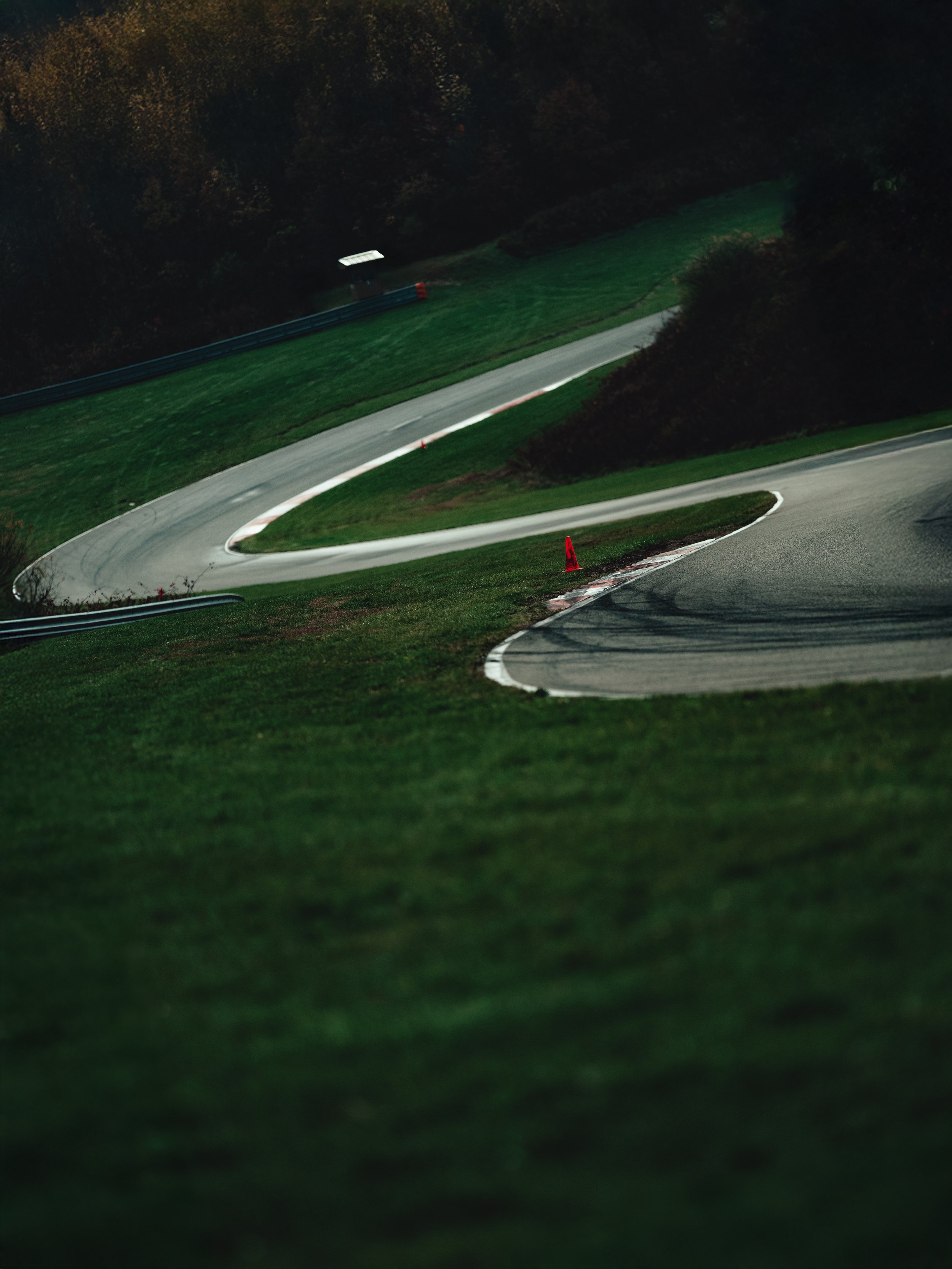
At 2.78 miles, the circuit never chased spectacle. It followed the land instead—letting elevation shape commitment. Corners arrive already loaded. Braking zones rarely exist in isolation. The track asks drivers to carry information forward. That conversation starts long before the apex.
It starts under the asphalt.
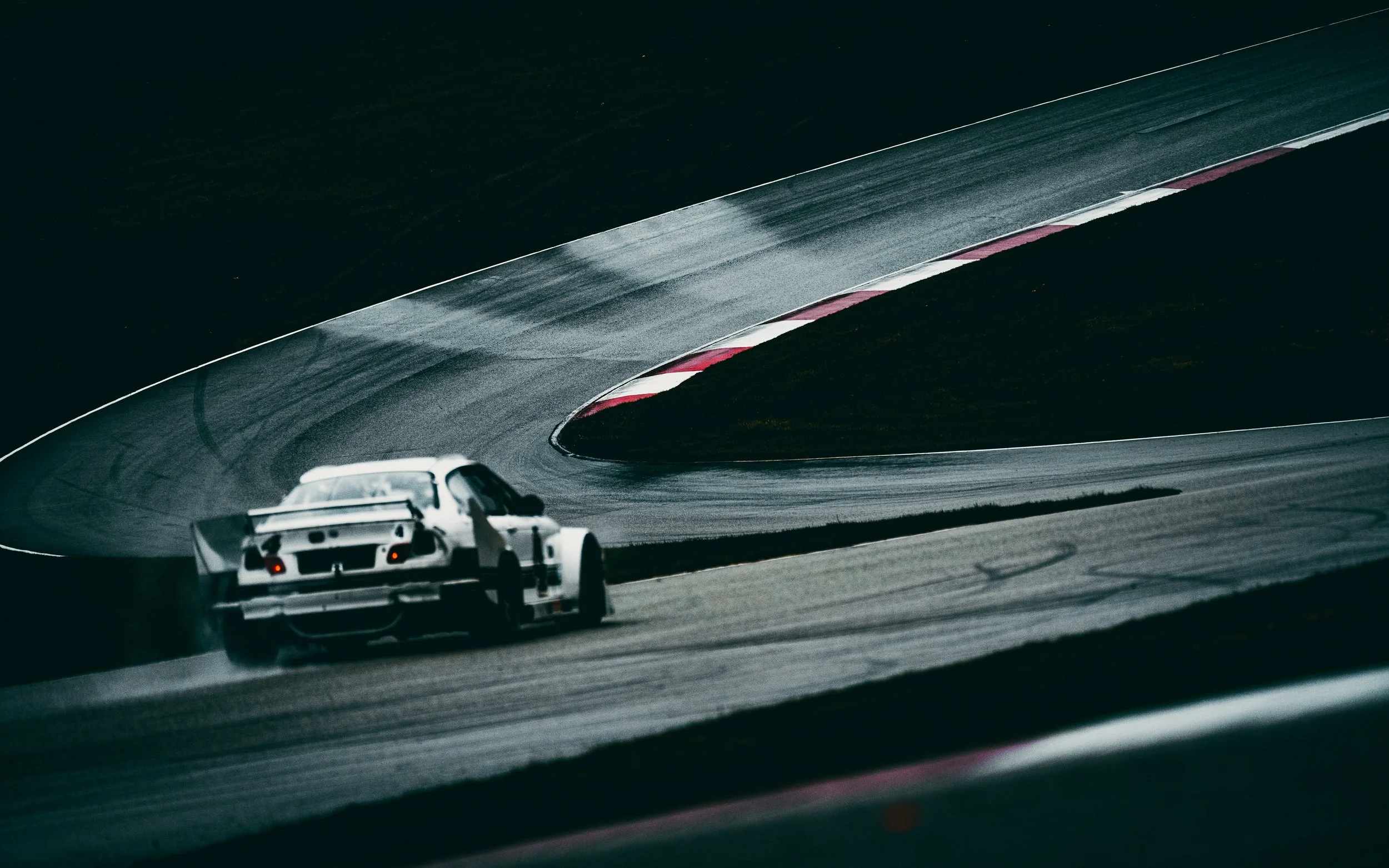
Structural Choice
Most drivers talk about PittRace’s grip as if it were purely a surface trait. It isn’t. The defining choice lives beneath the blacktop: a reinforced concrete base. Unlike asphalt, concrete doesn’t flex. Under heavy GT cars and sustained lateral load, it limits deflection almost entirely. The asphalt above it works harder—but more honestly. A repeated layering process of compacting and cooling. Less rutting. Less shear. Fewer moments where the tire suddenly stops agreeing with what’s underneath.
Thermal Behavior
Heat behaves differently too. Instead of migrating in pockets and creating surprise ‘grease’ zones, temperature spreads more evenly.
The track doesn’t fall off a cliff mid-session.
It fades gradually, lap by lap, and tells you when it’s happening.
Surface Geometries
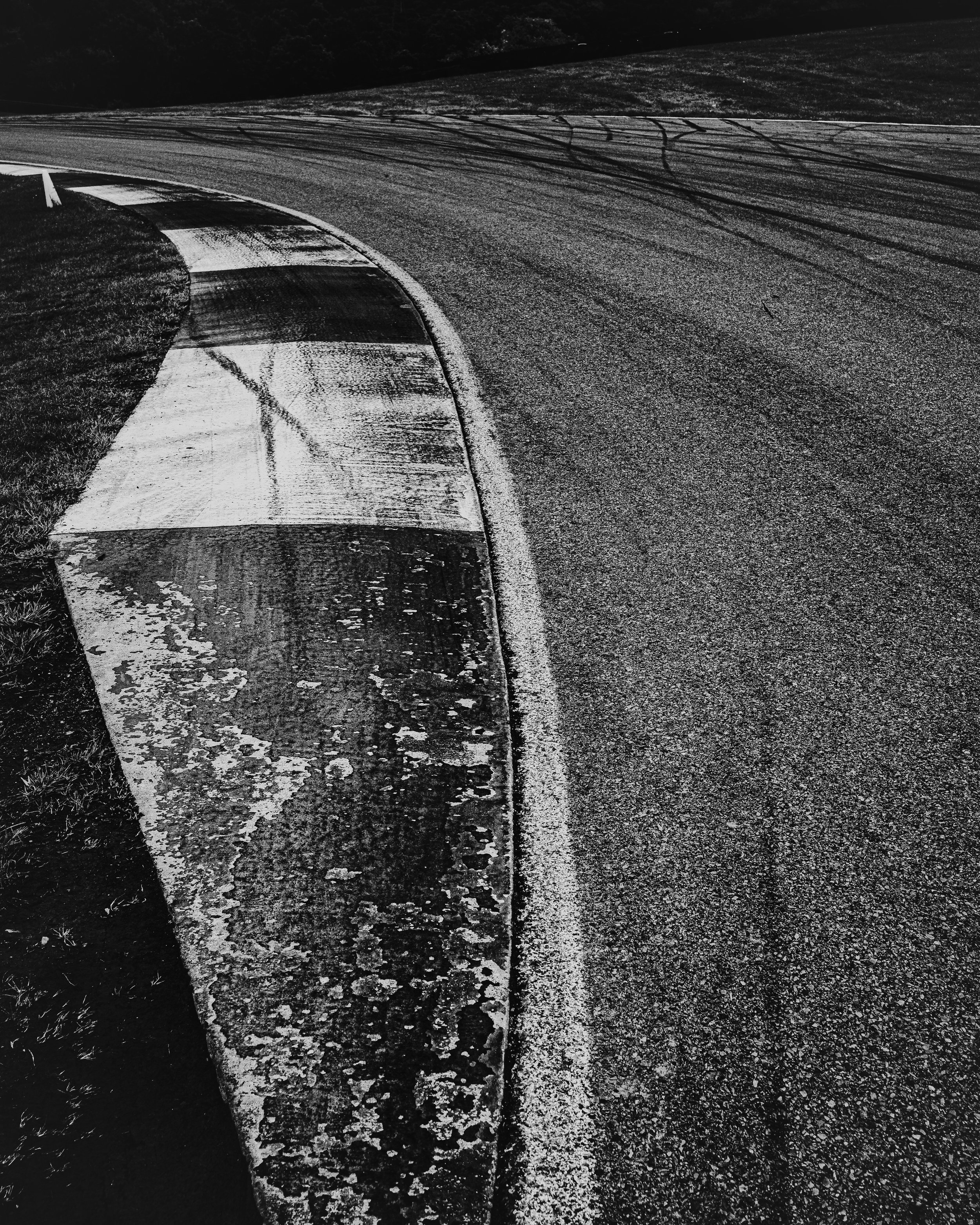
The asphalt itself is deliberately fine-graded. Smaller aggregate. Consistent spacing. Less vibration through the chassis, more clarity through the steering. The stone is angular—diamond-faced, not rounded—and it locks together under compaction. Under braking and sustained cornering, the surface resists movement instead of smearing.
Predictable Wear
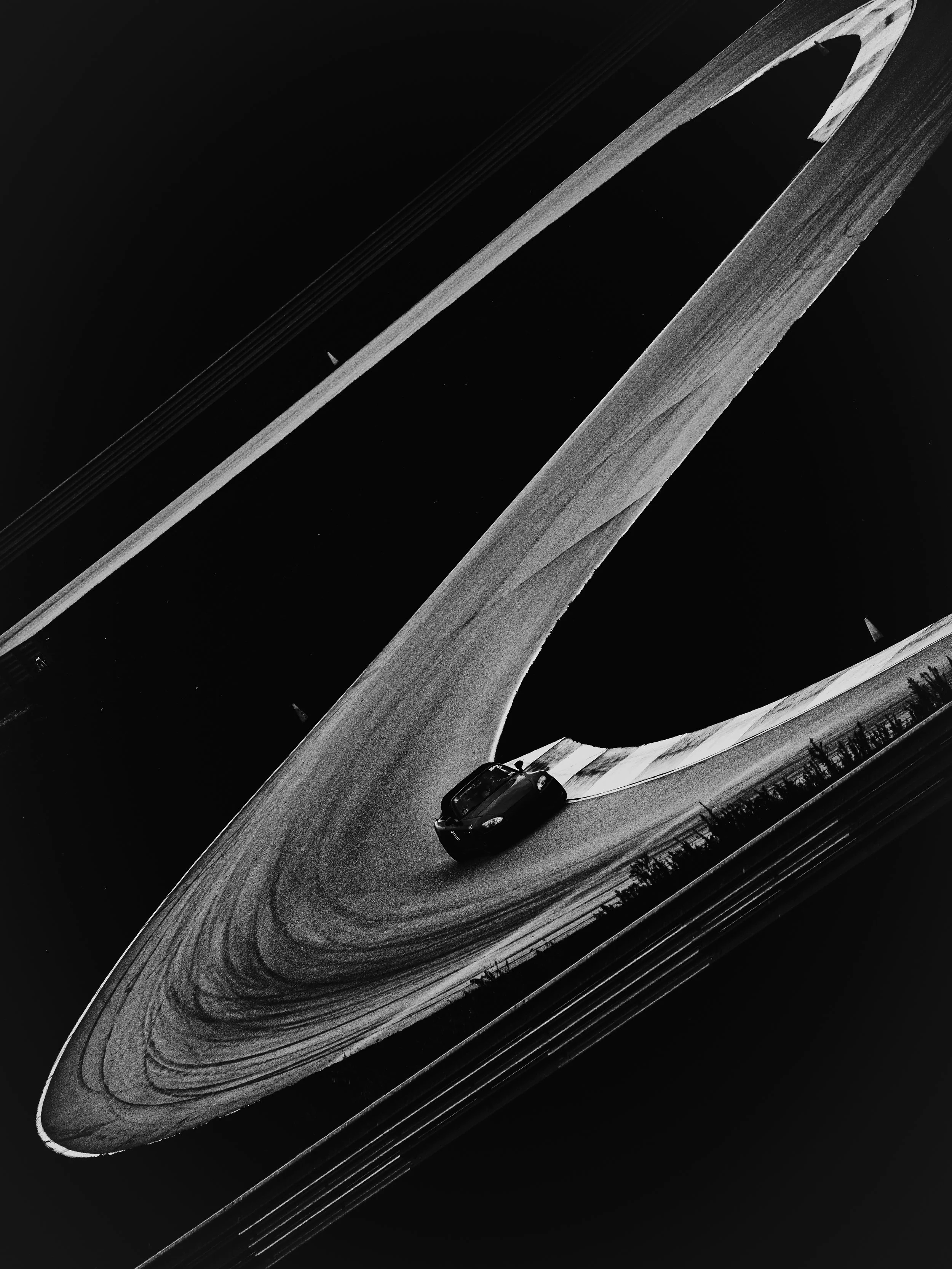
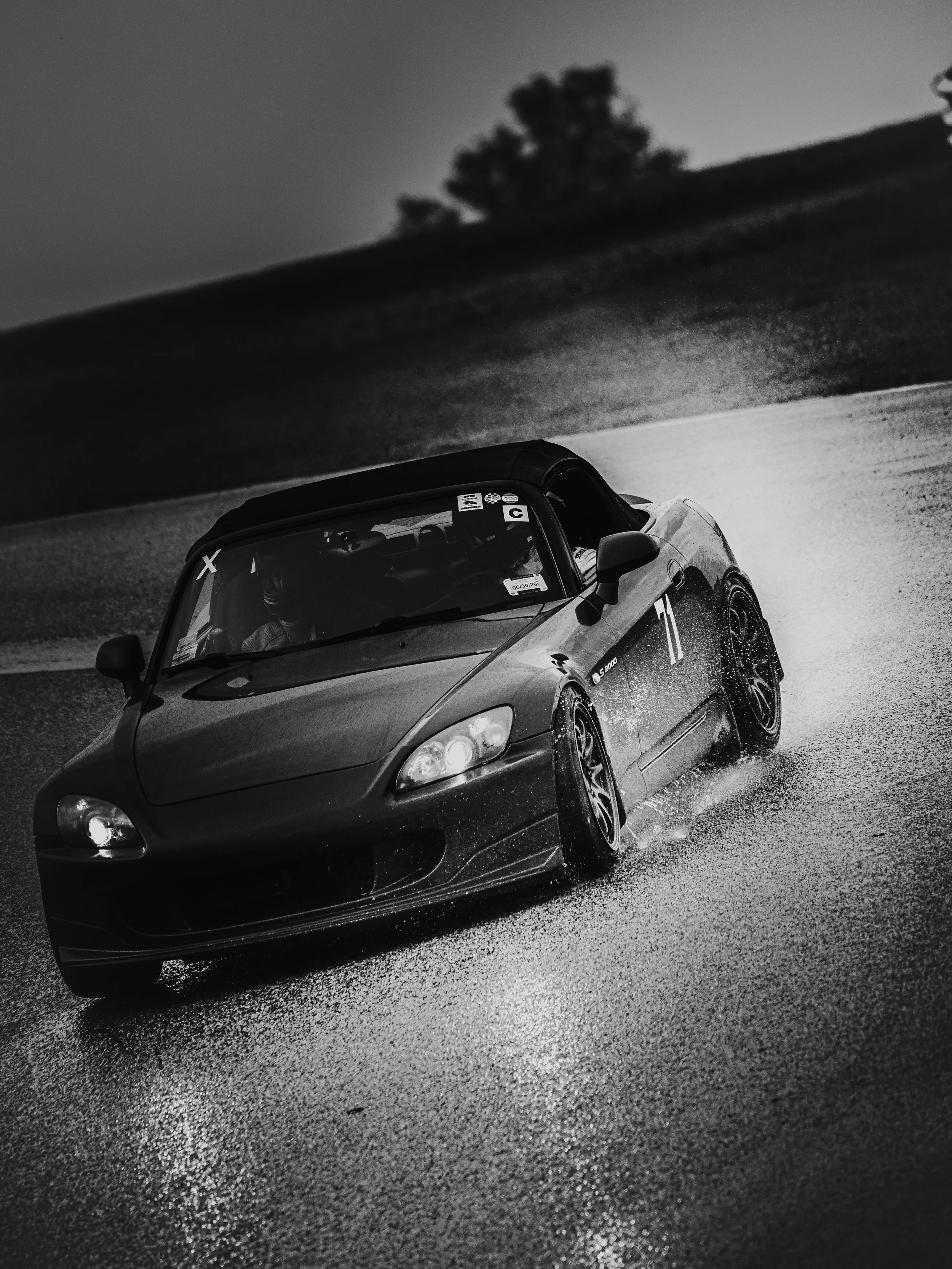
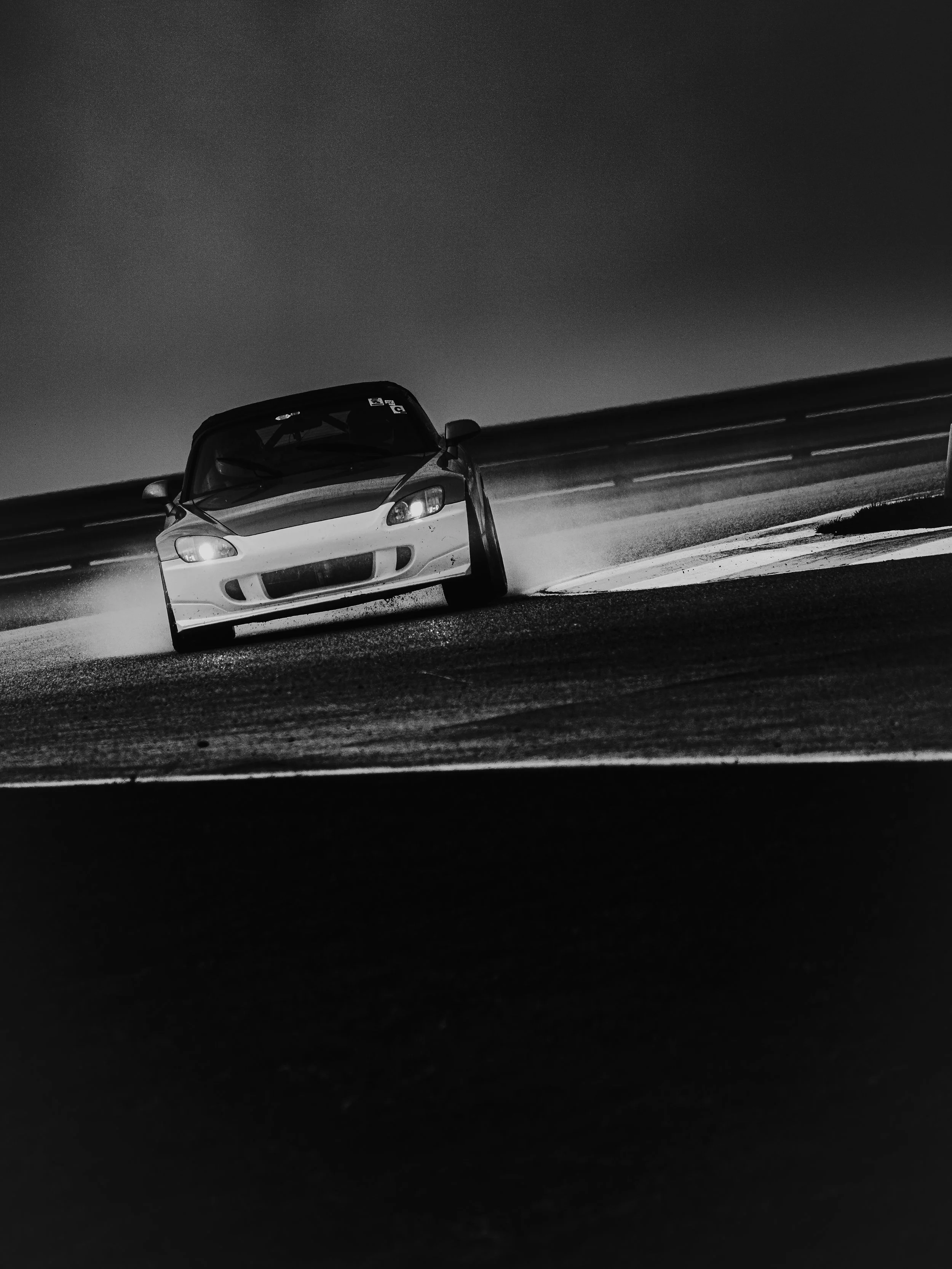
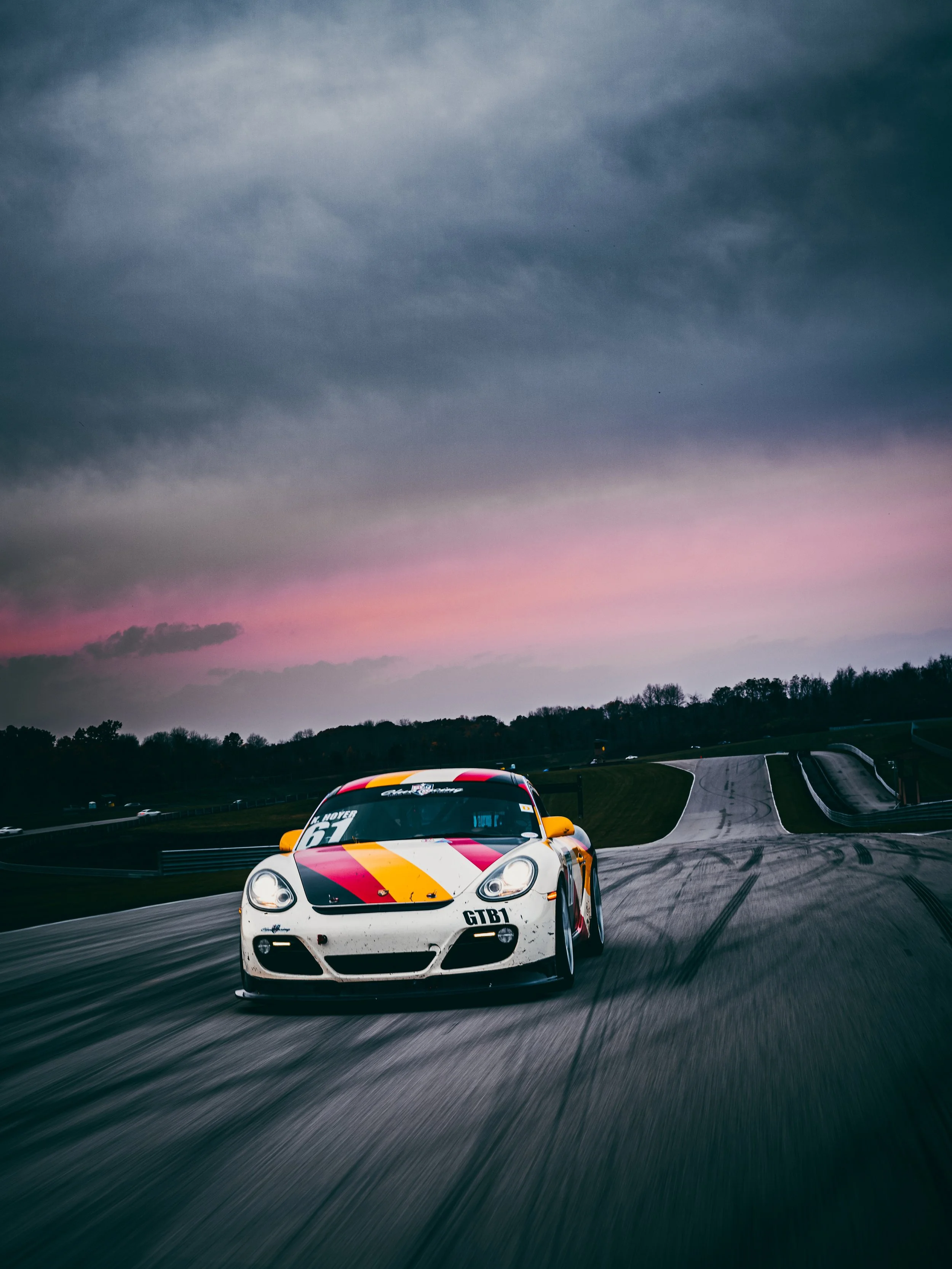
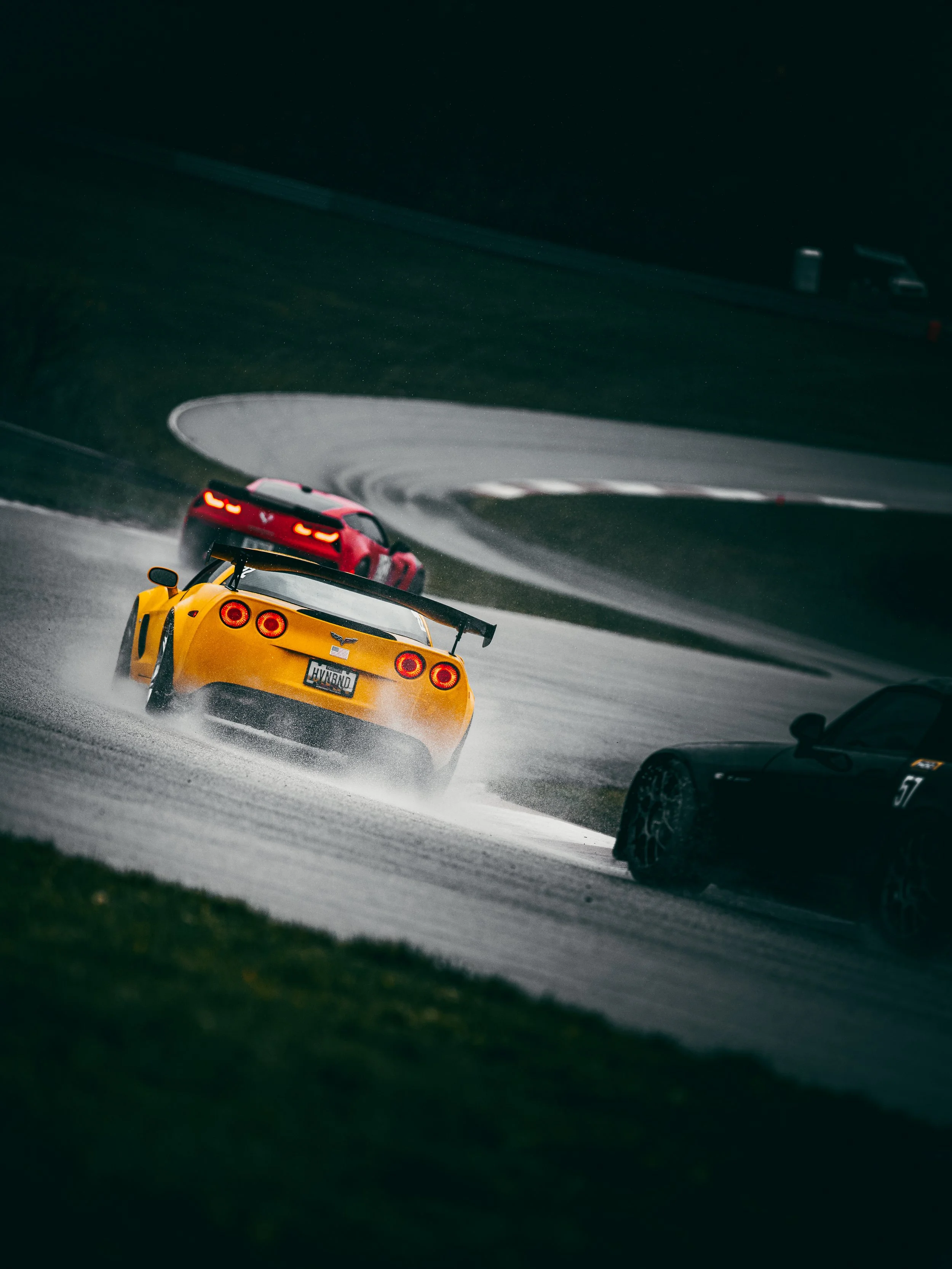
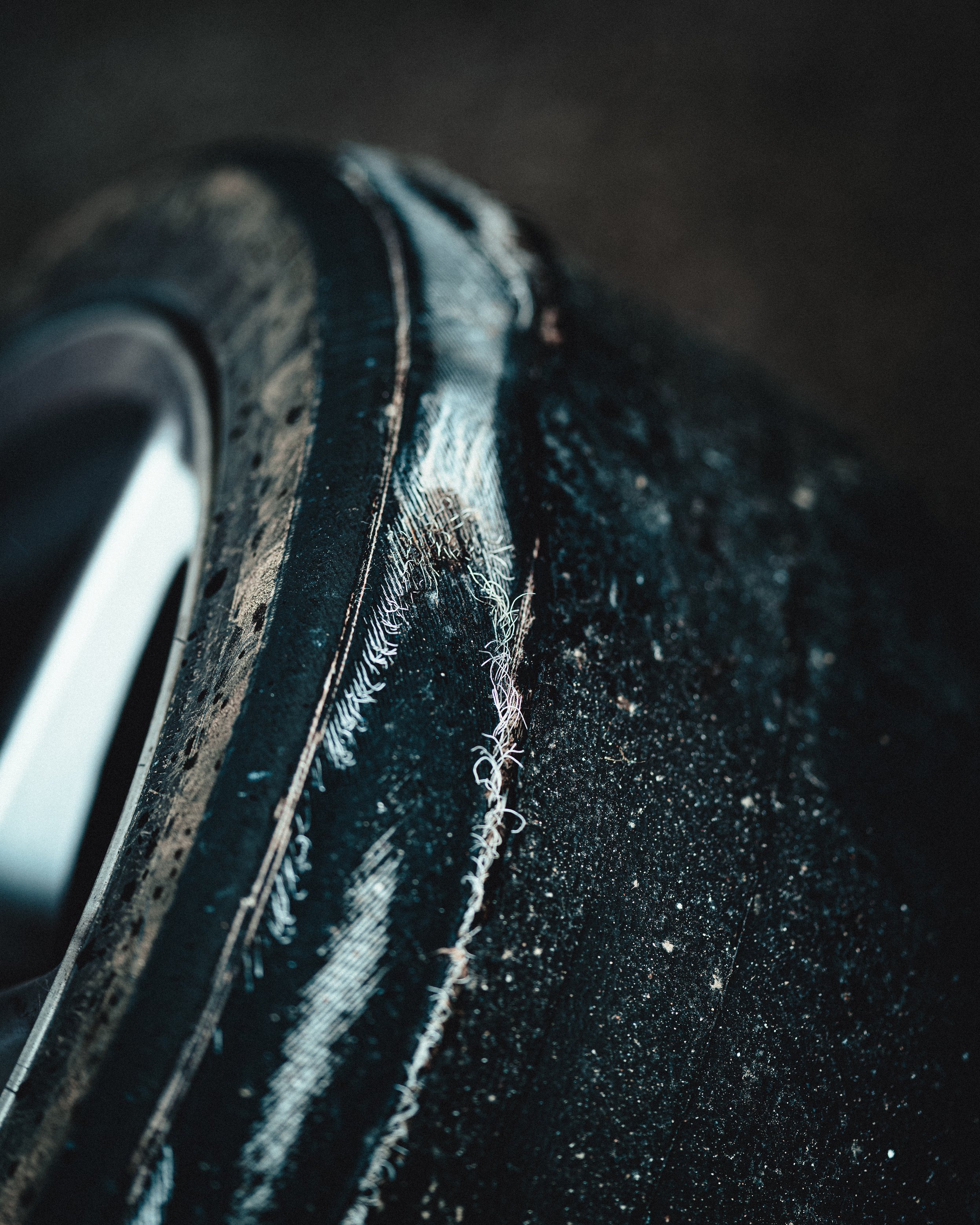
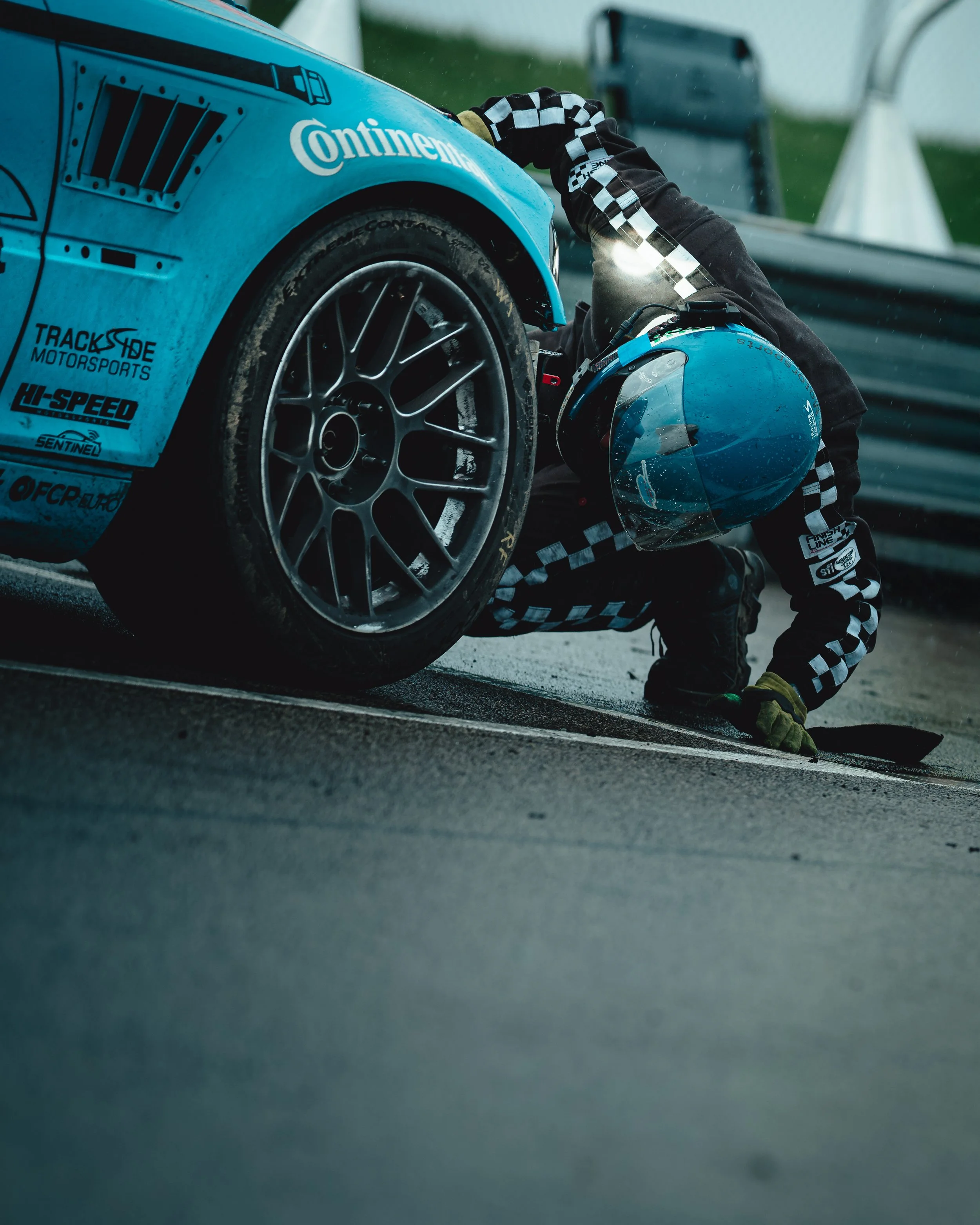
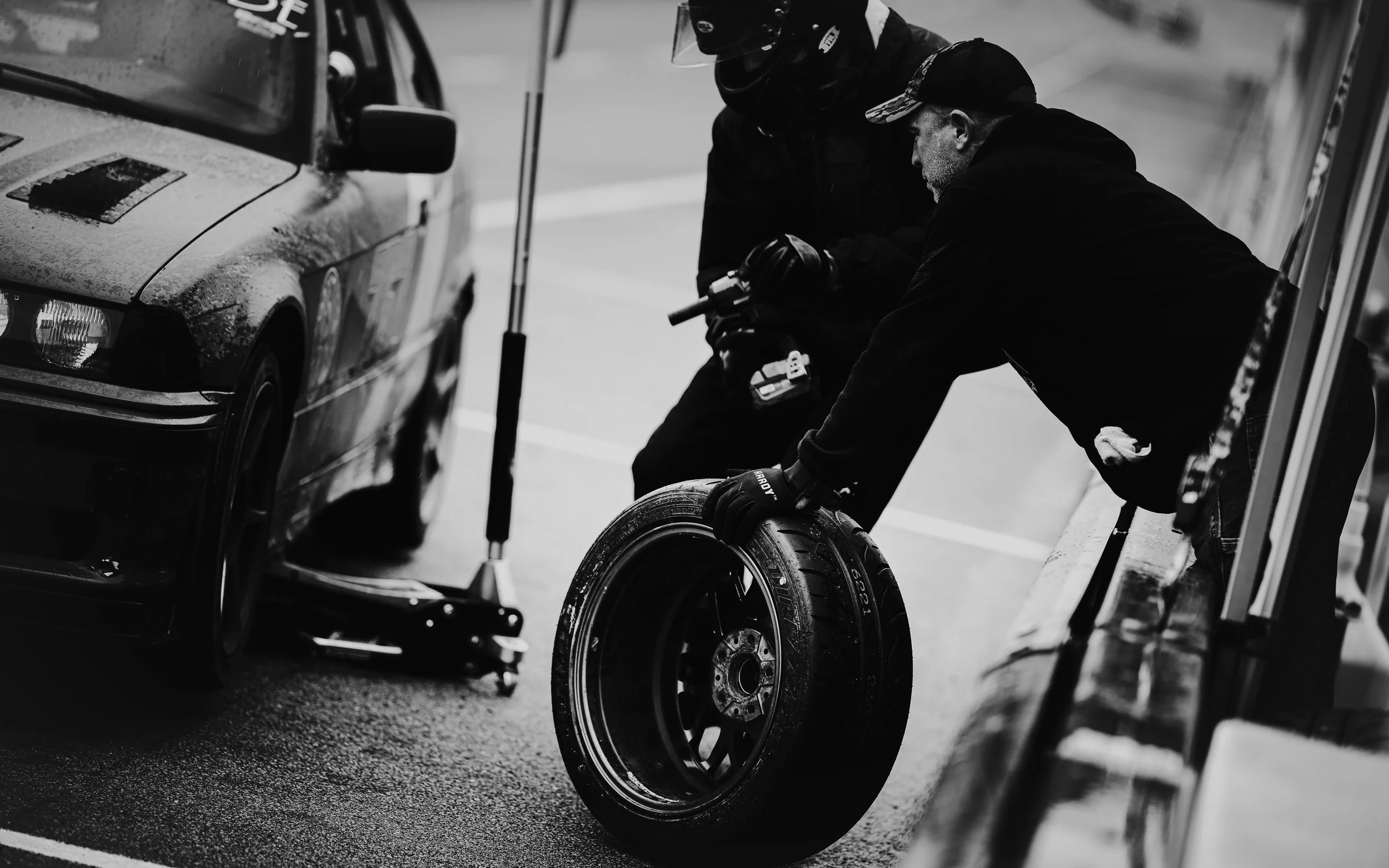
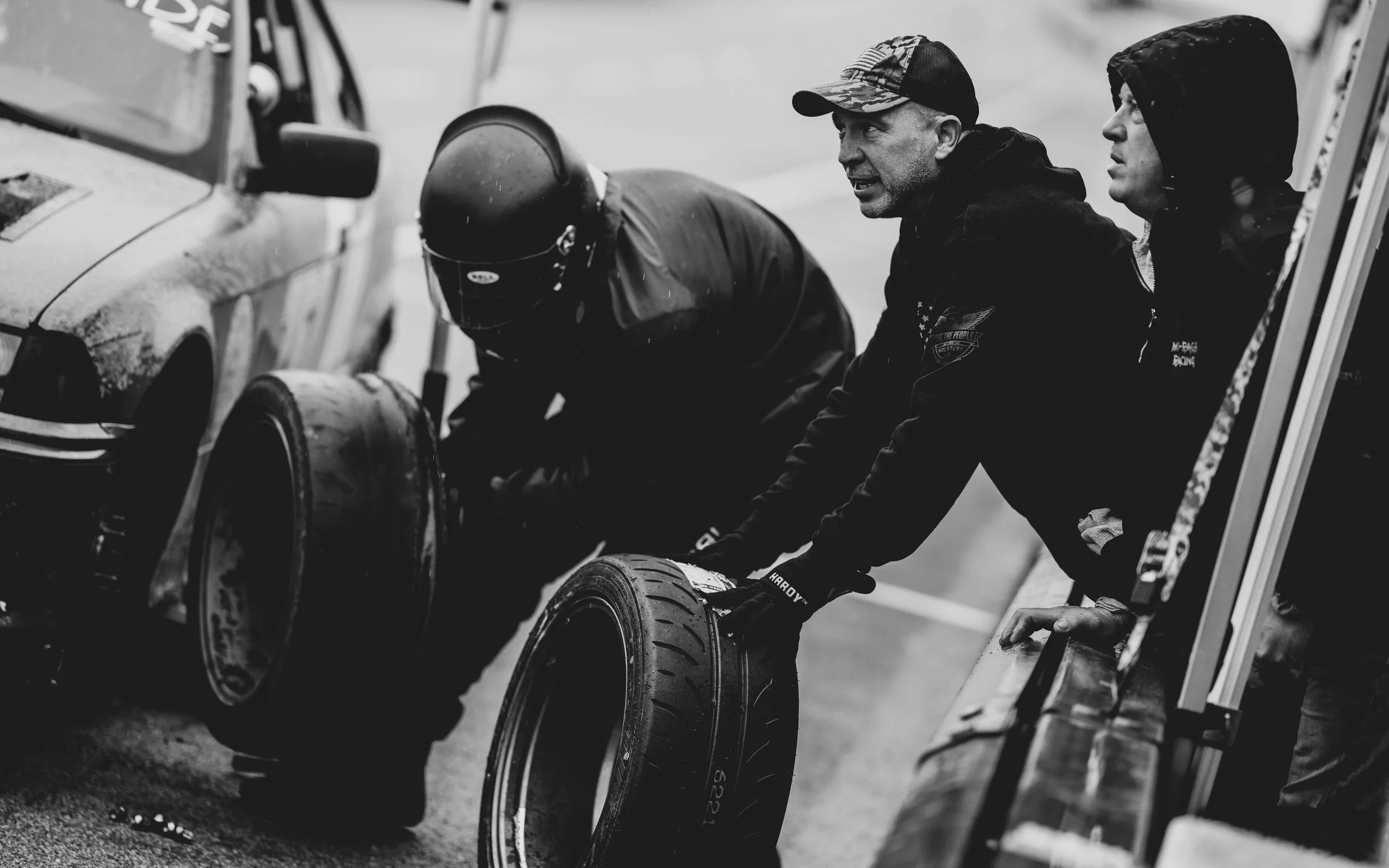
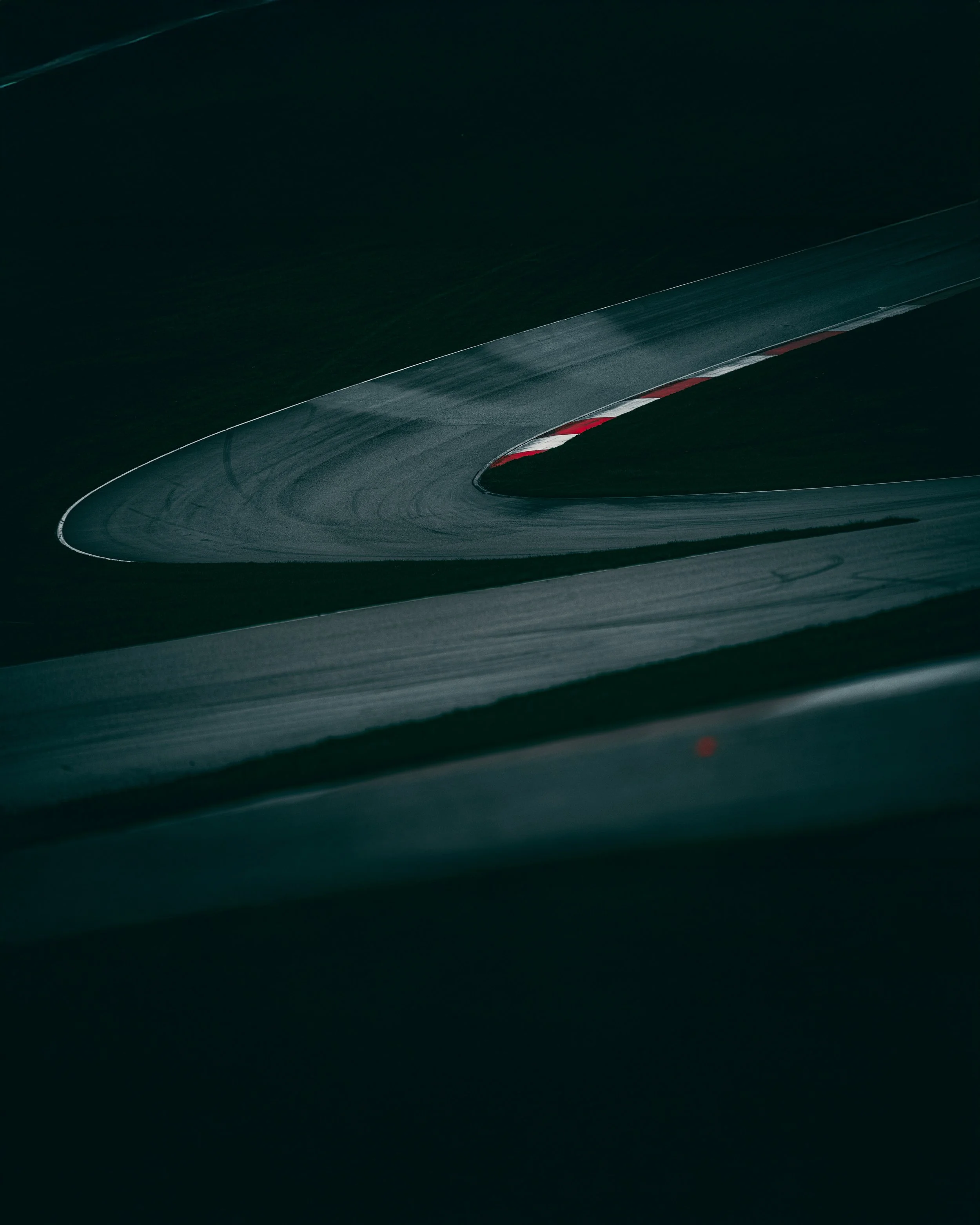
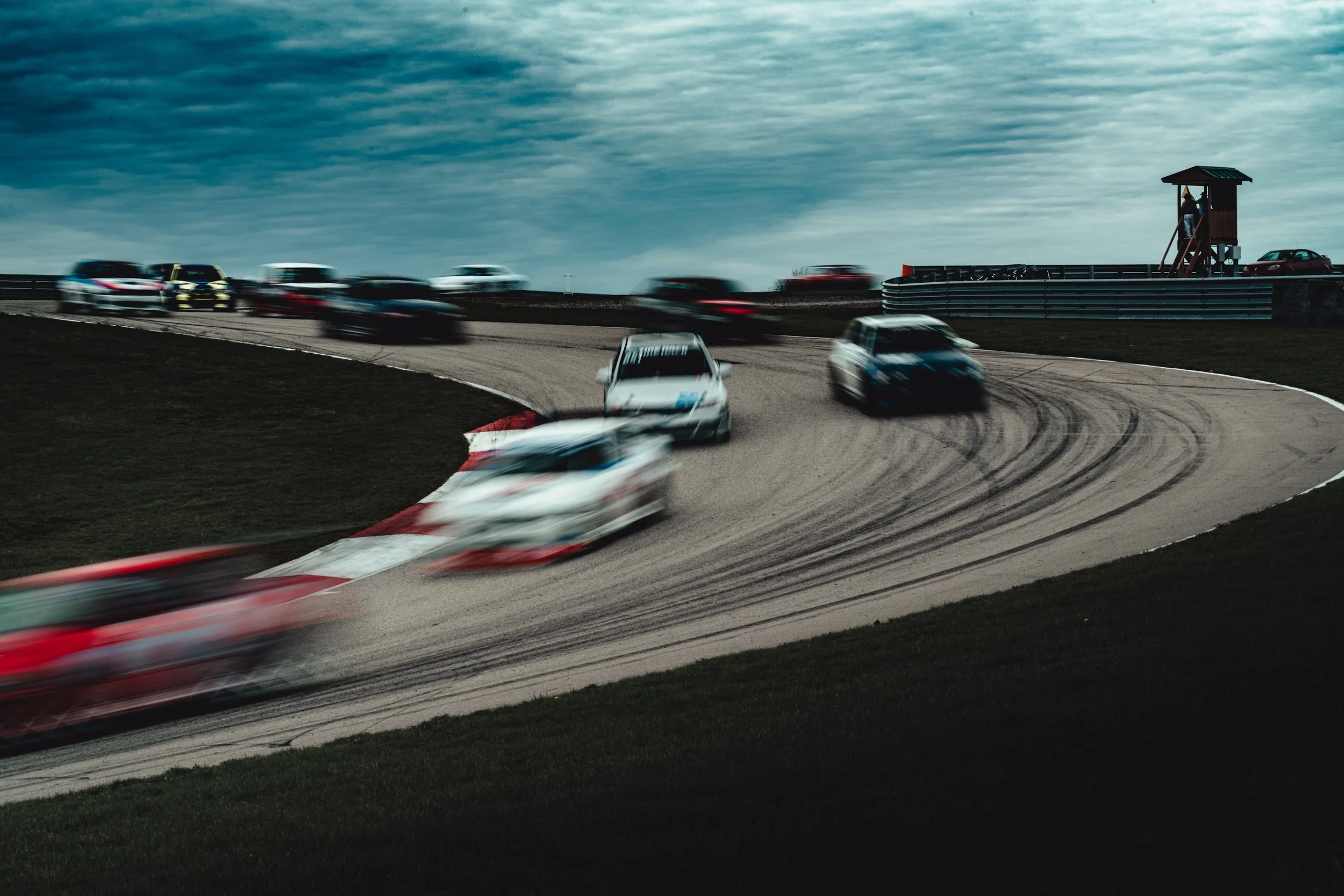
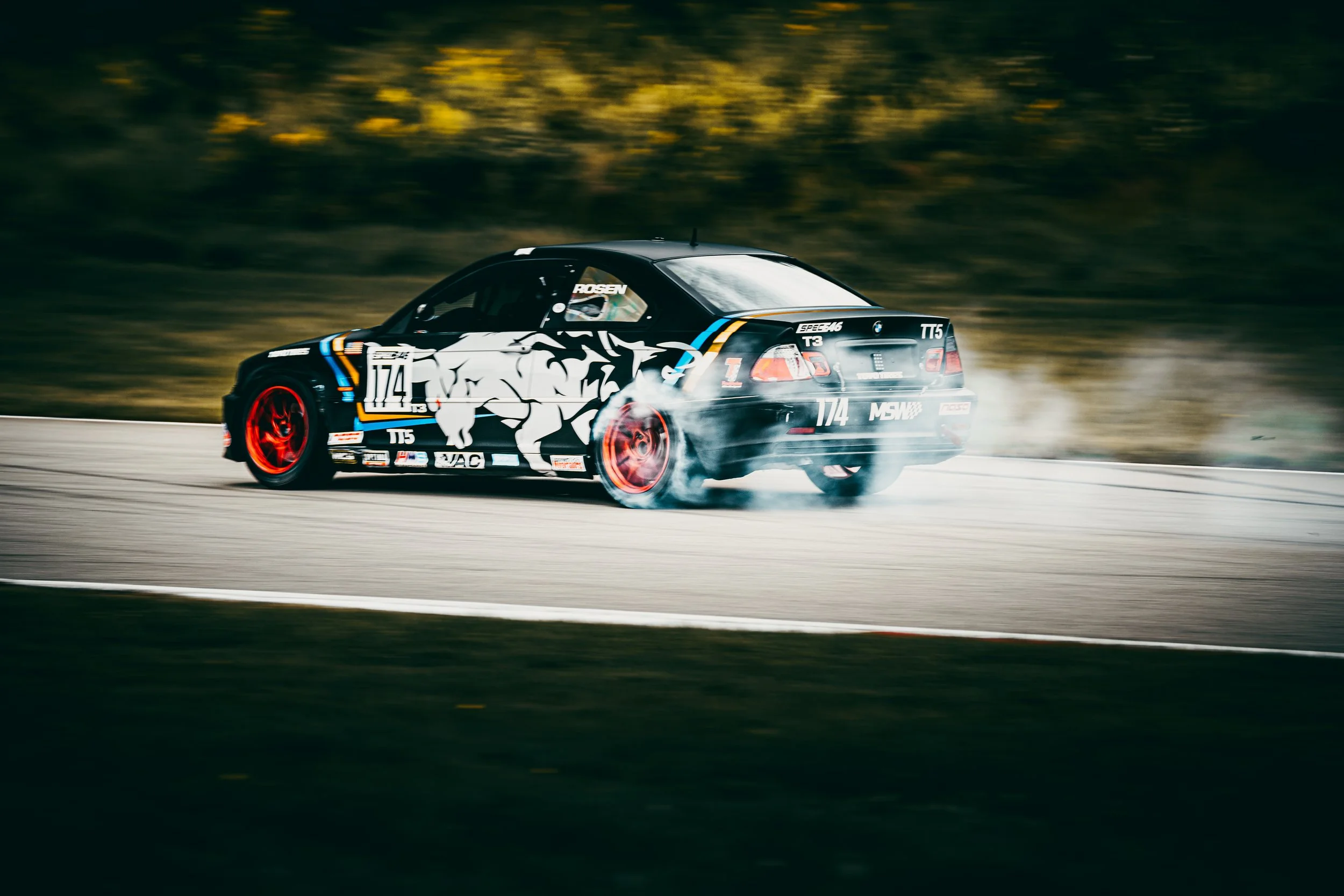
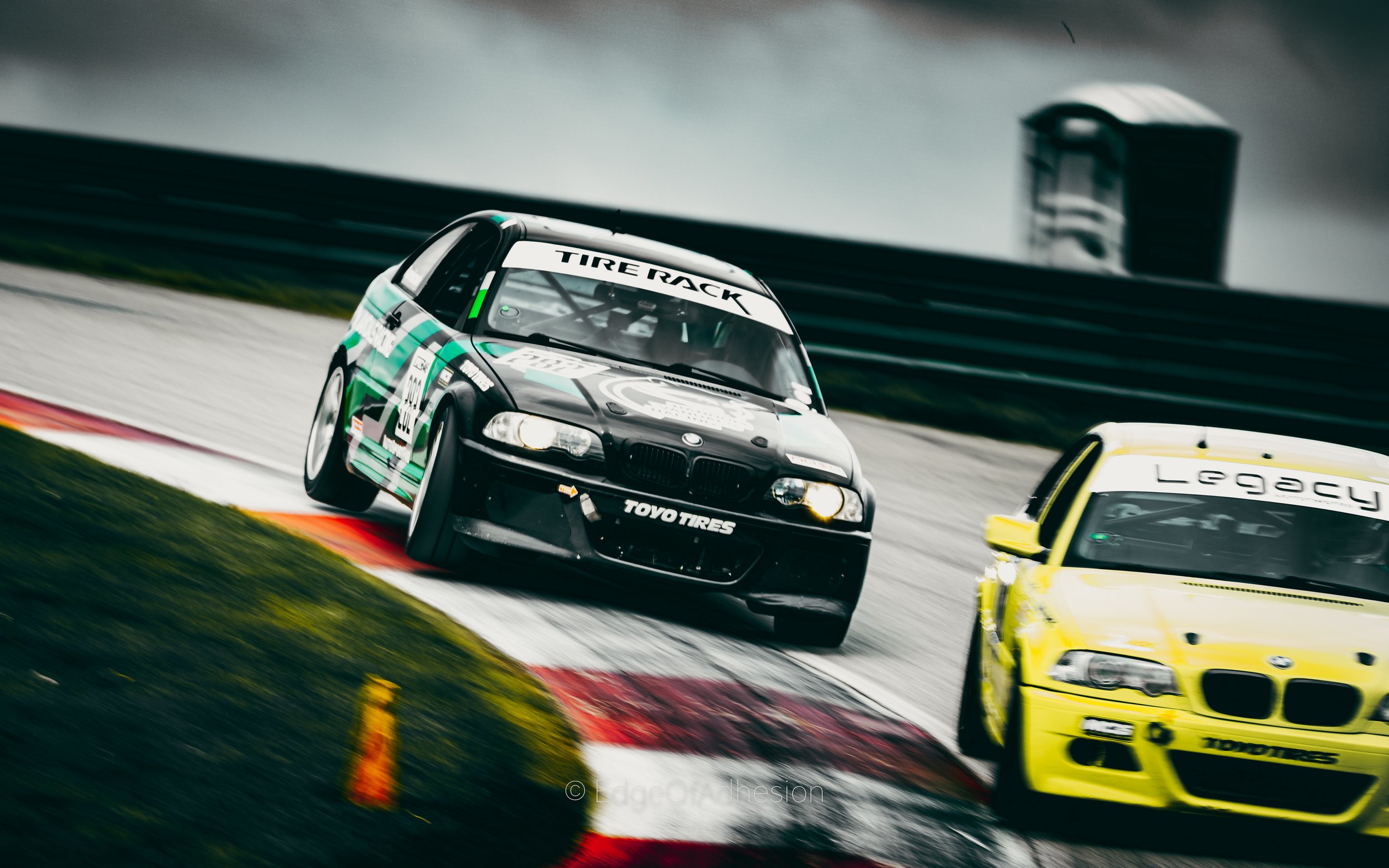
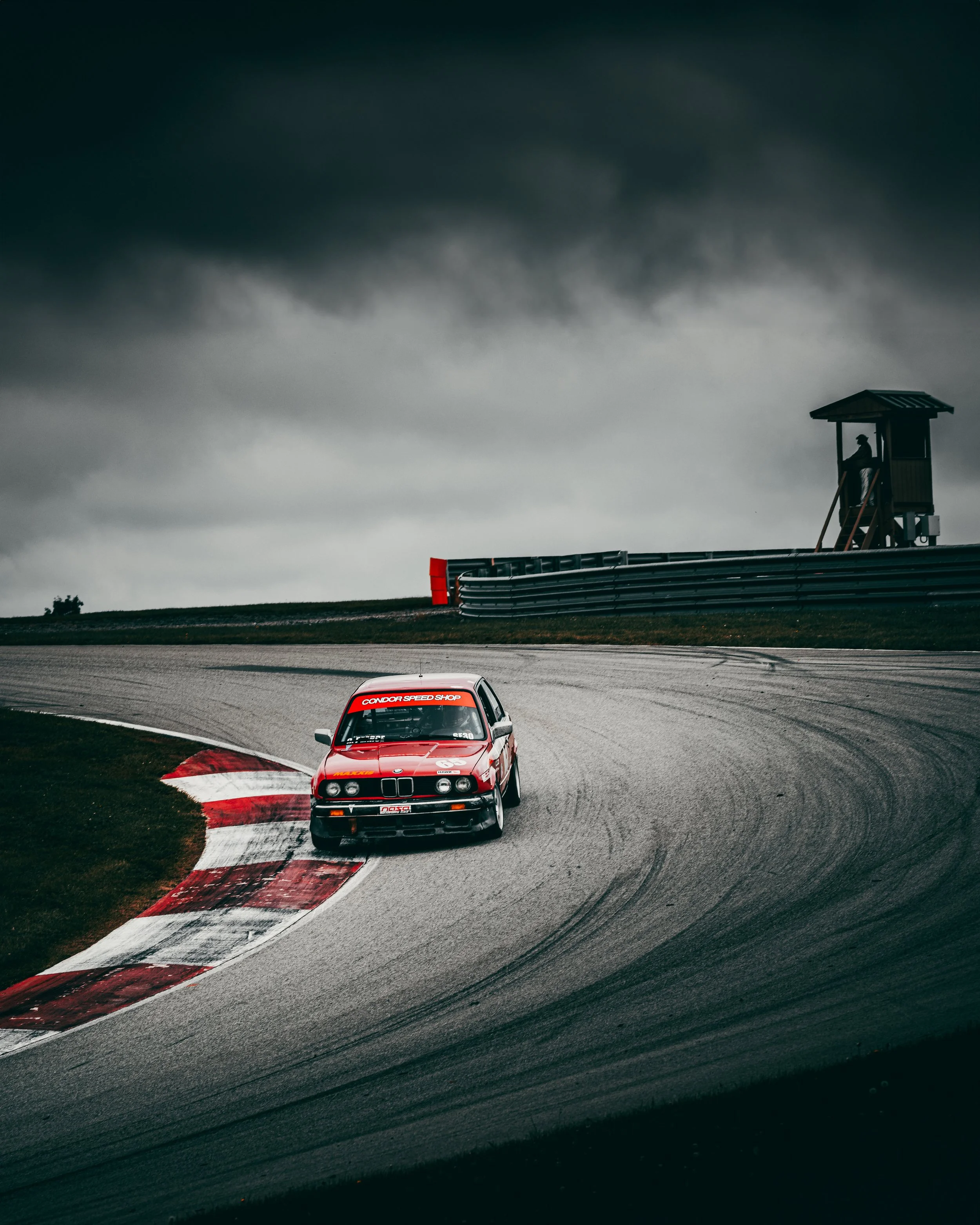
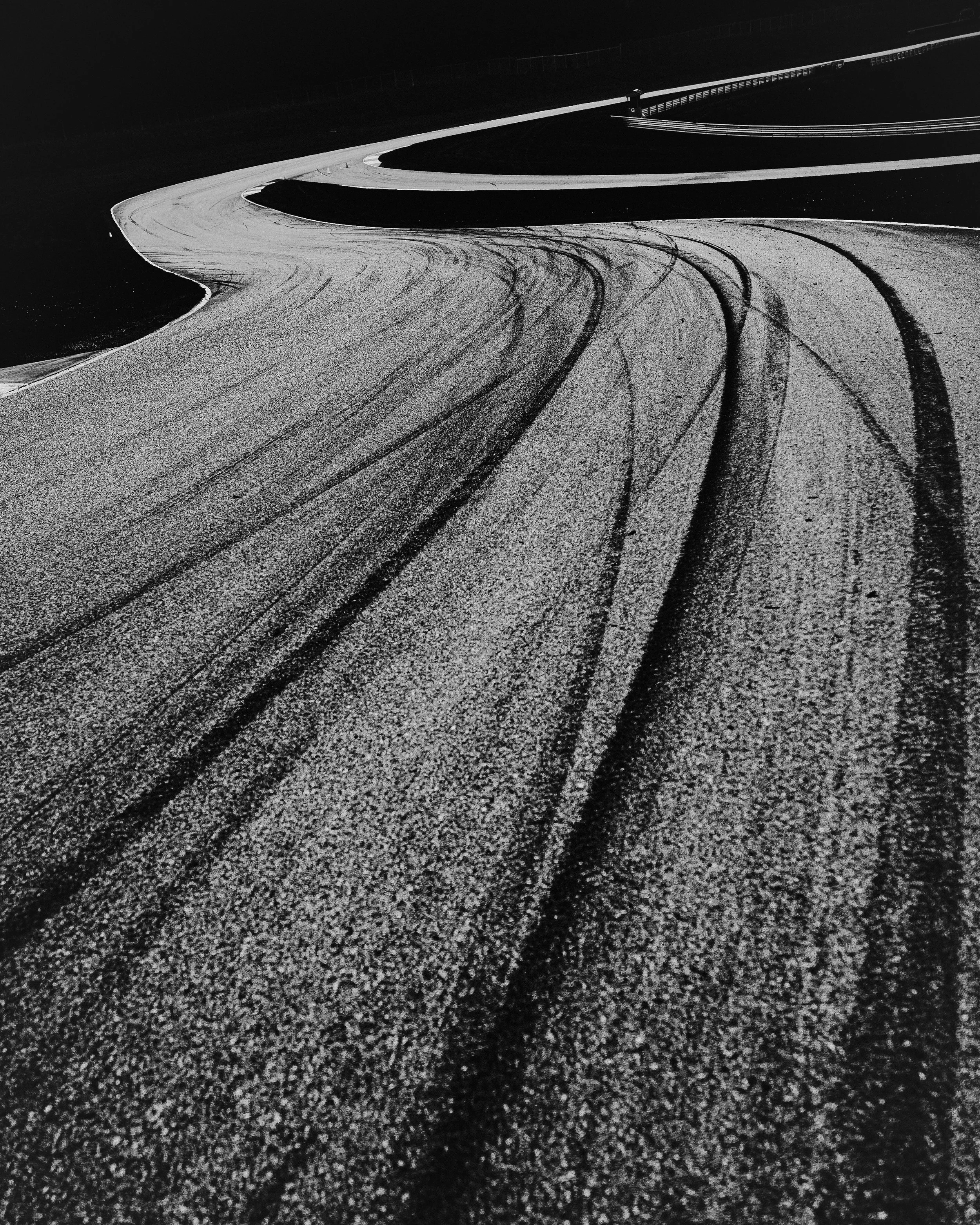
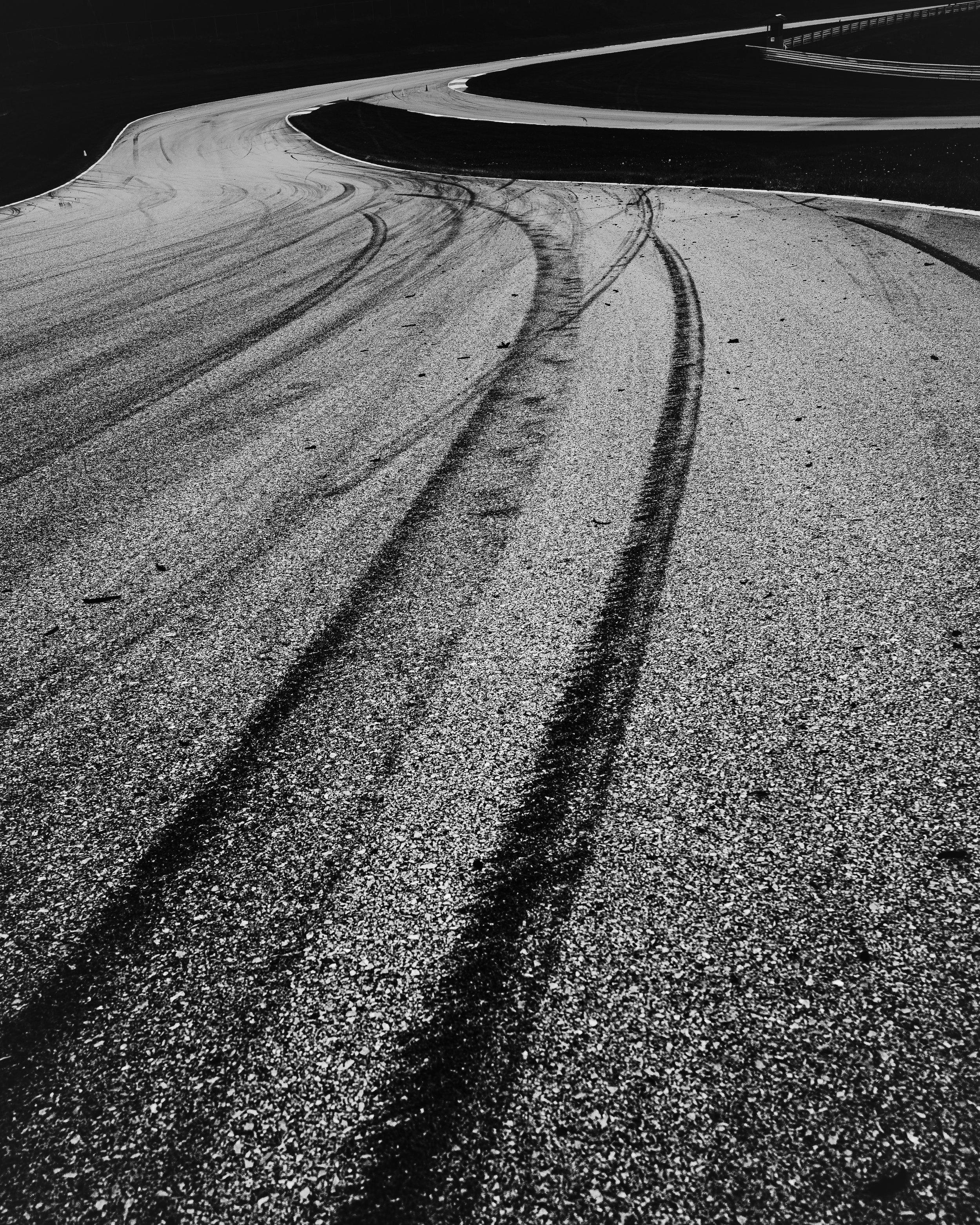
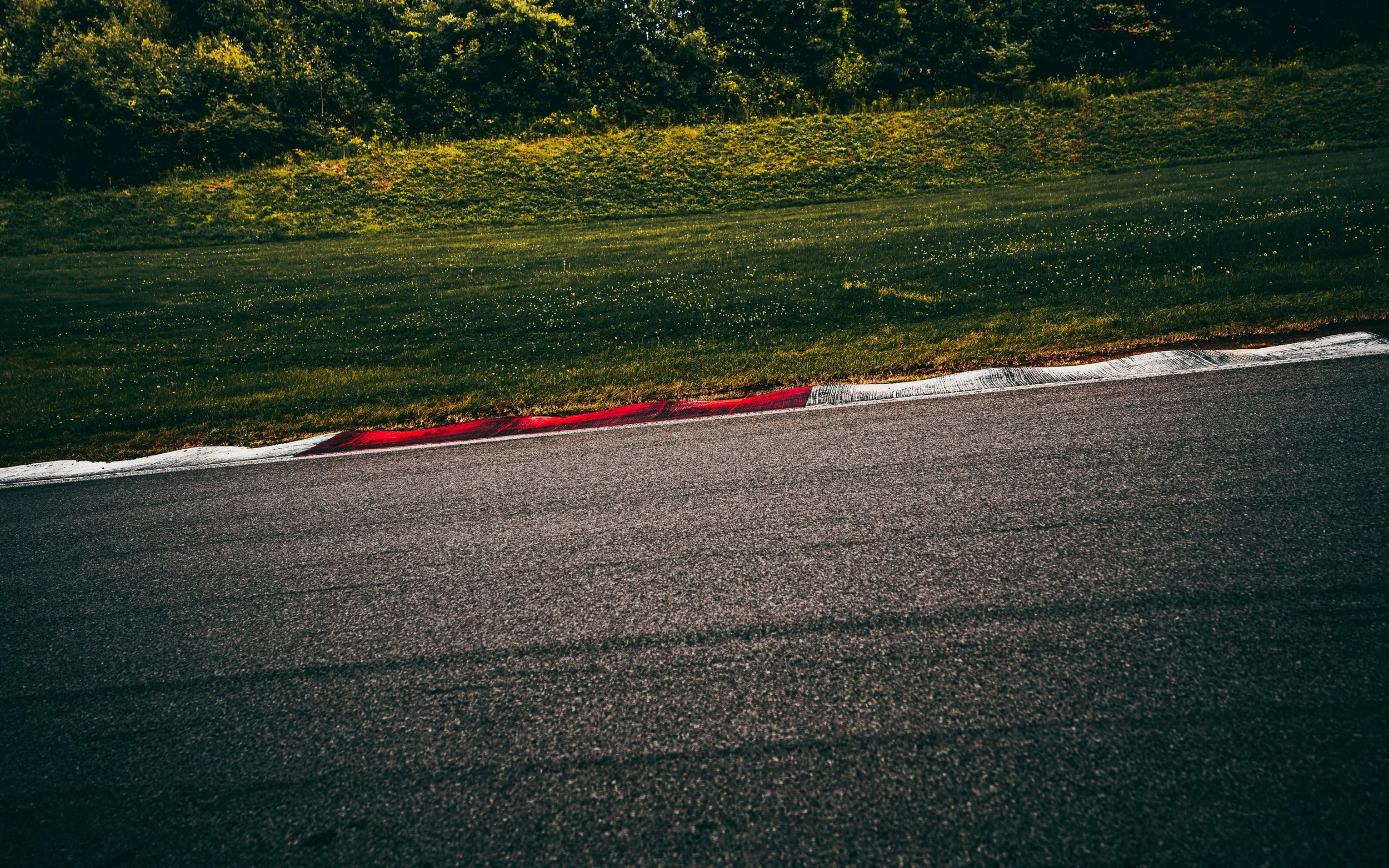
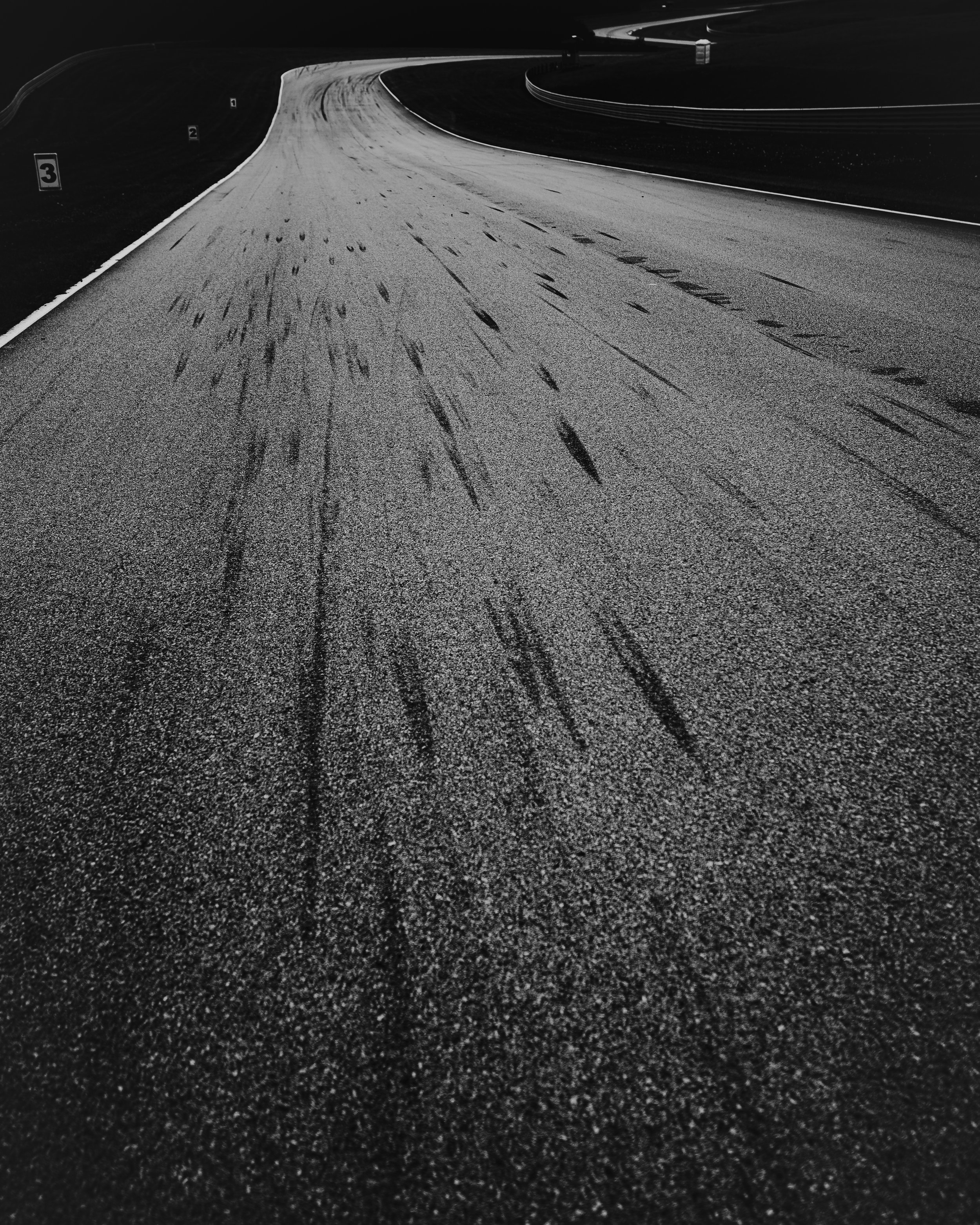
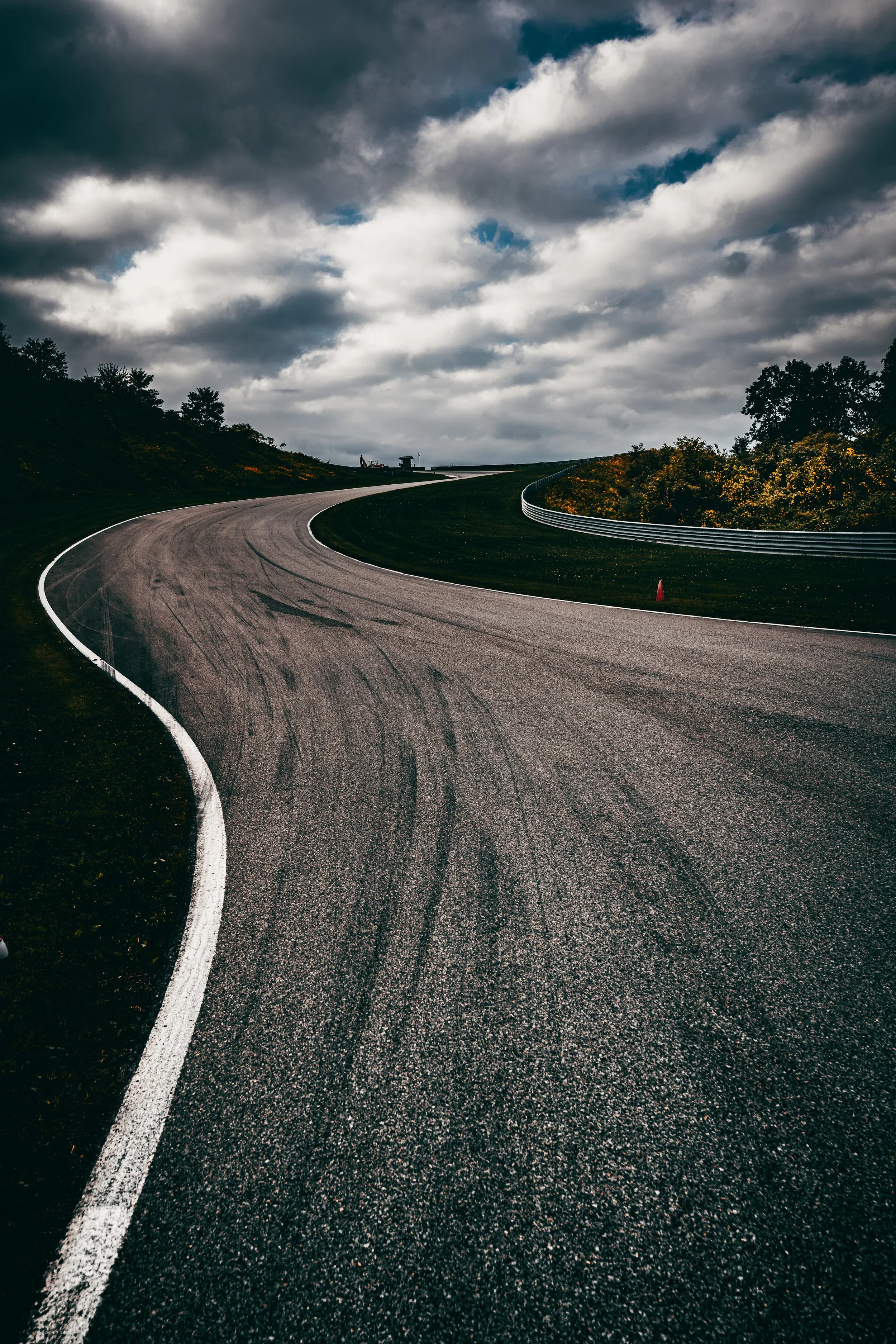
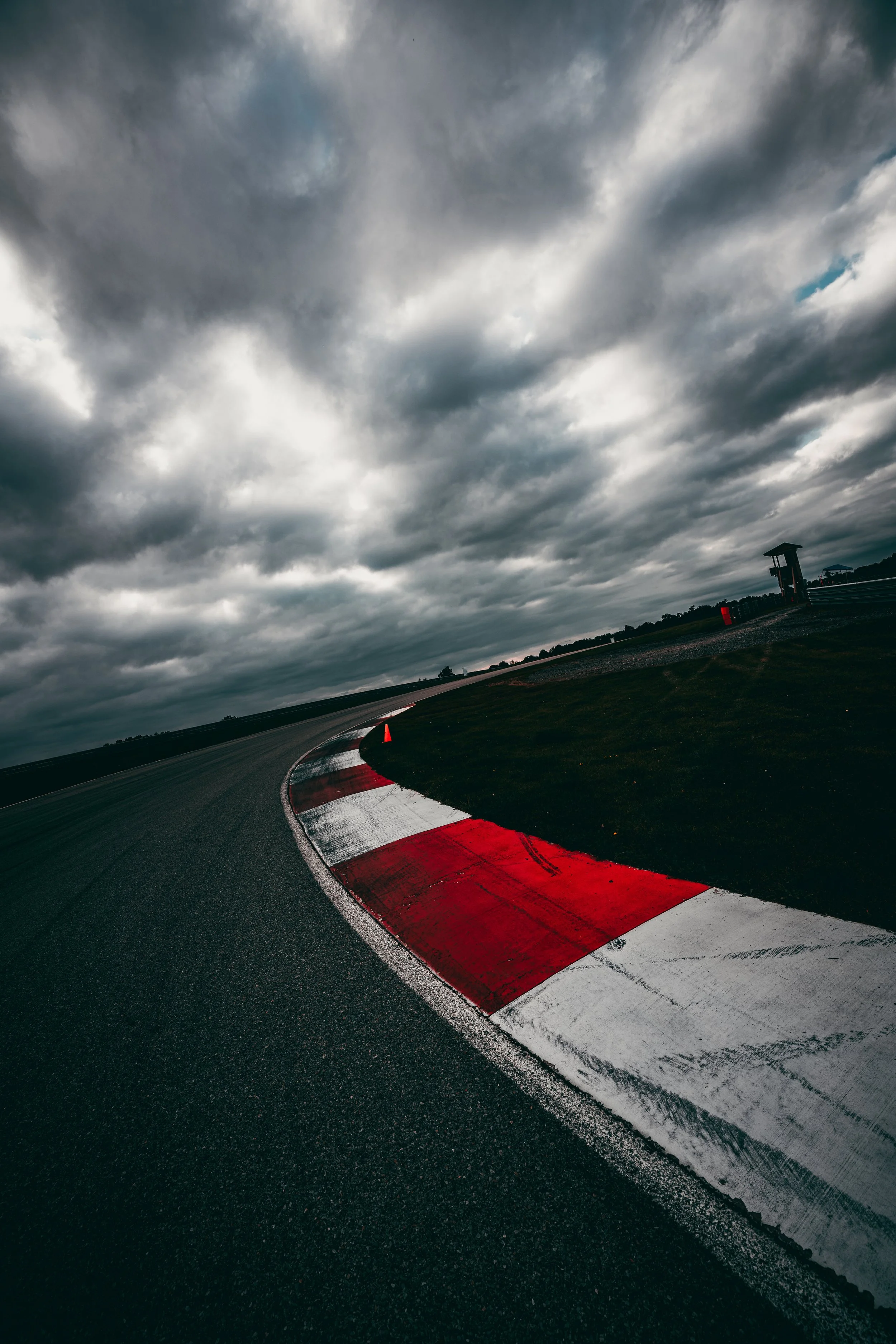
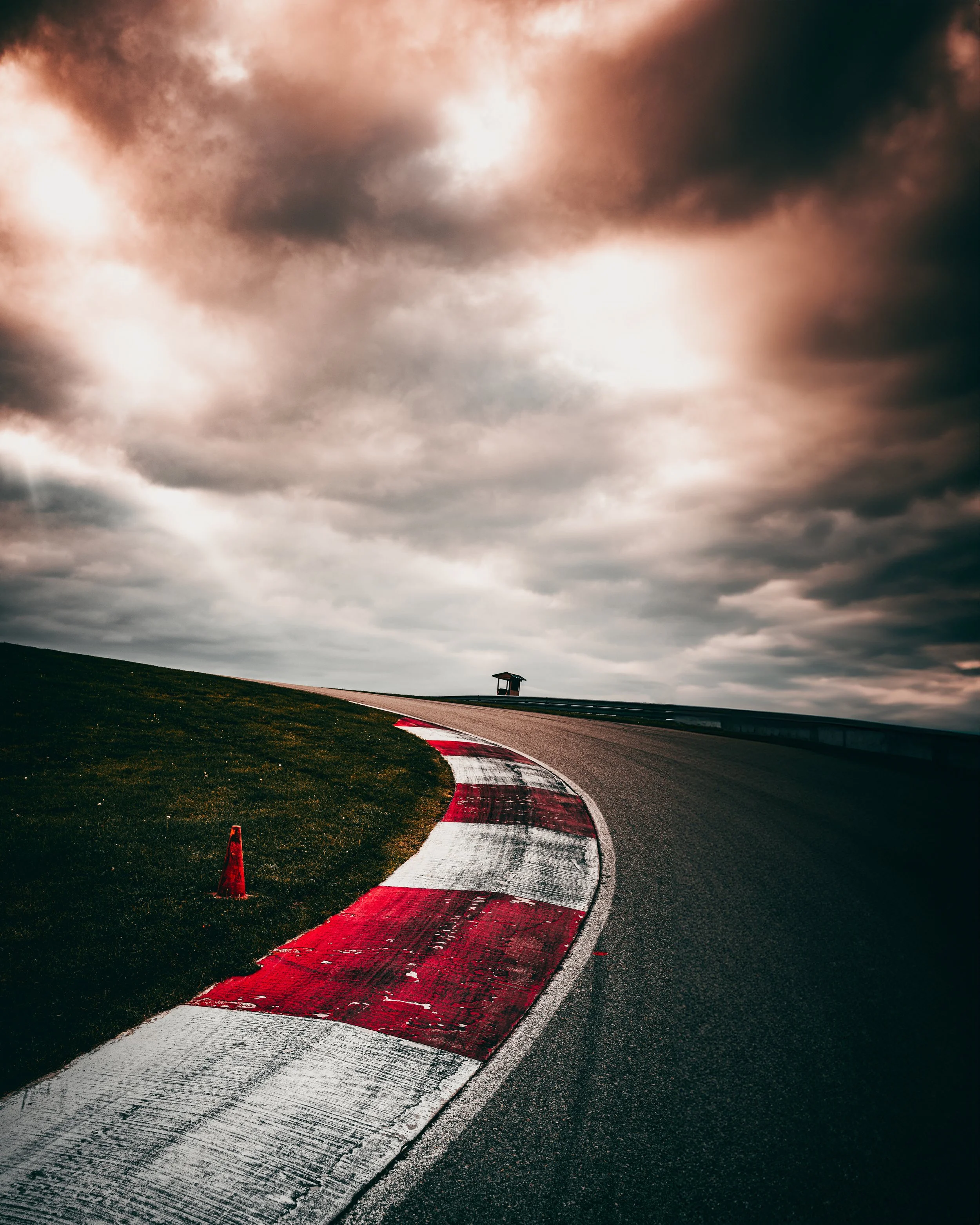
Resistance comes at a cost. PittRace eats tires. But it does so evenly. Predictably. The wear visible in the photos—rubbered exits, darkened arcs, scuffed curbing—isn’t chaos. It’s evidence. Grip doesn’t disappear without warning. Slip builds. Talks. Then asks a question.
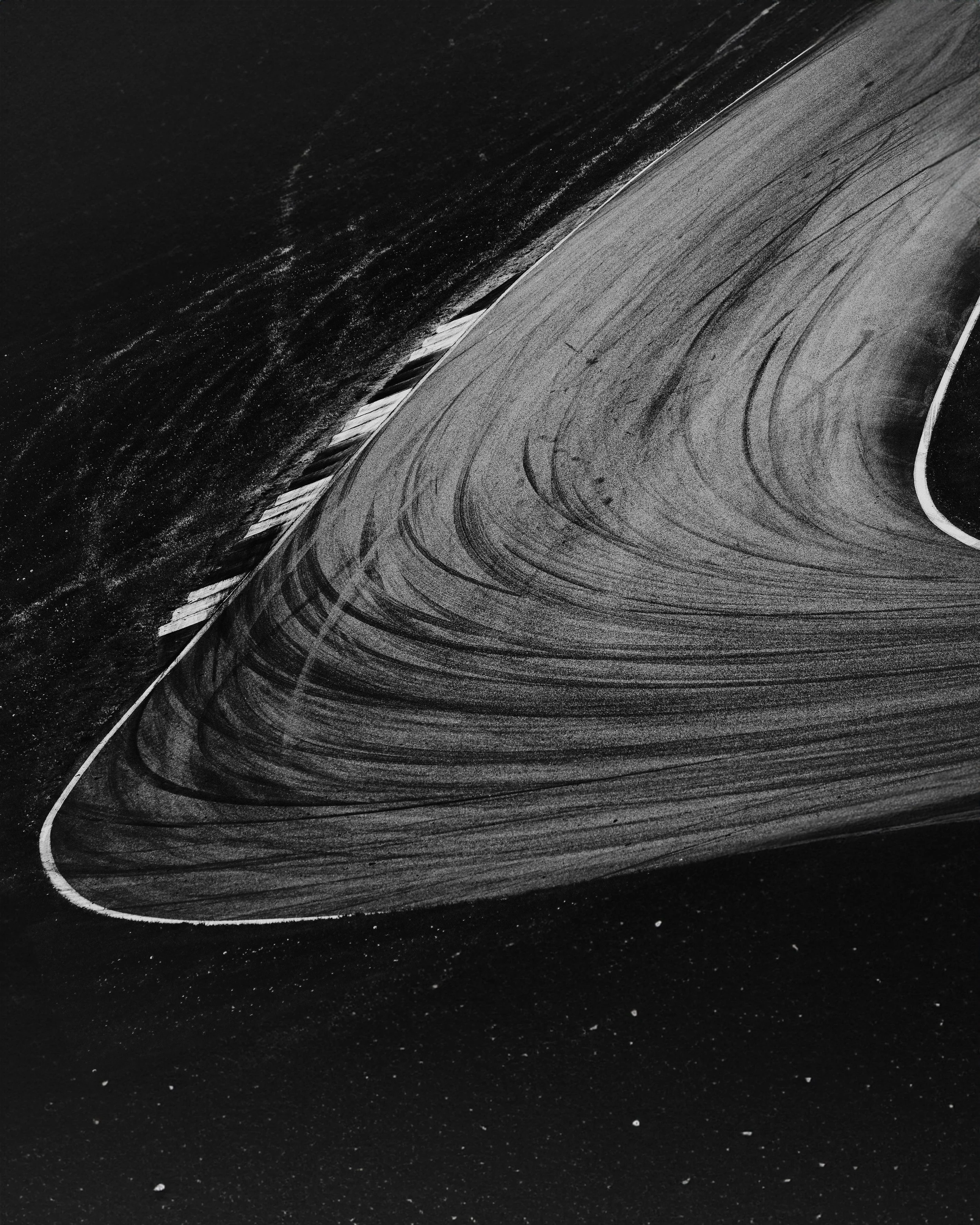
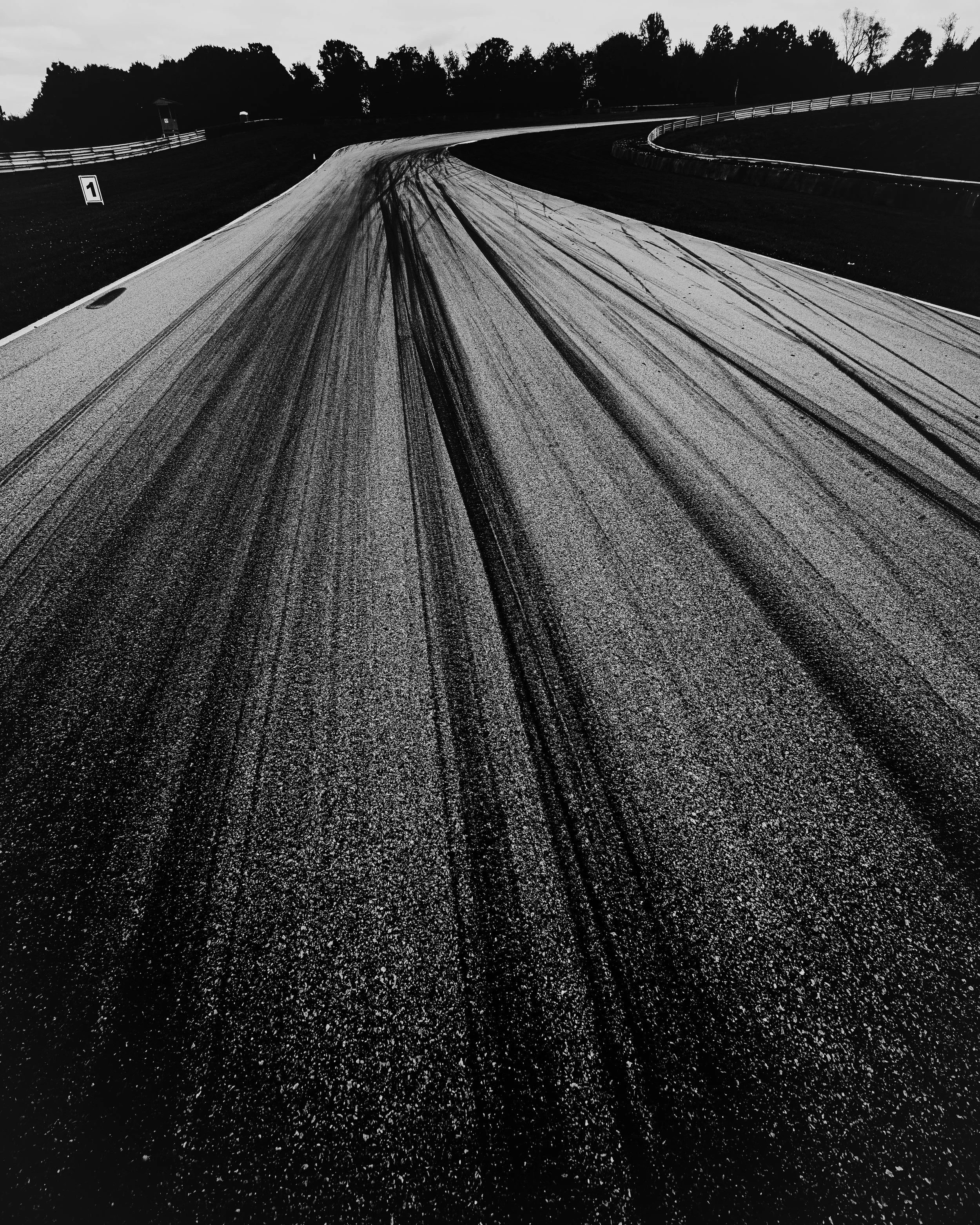
Texture in Use
This is where microtexture and macrotexture stop being academic terms and start becoming feel.
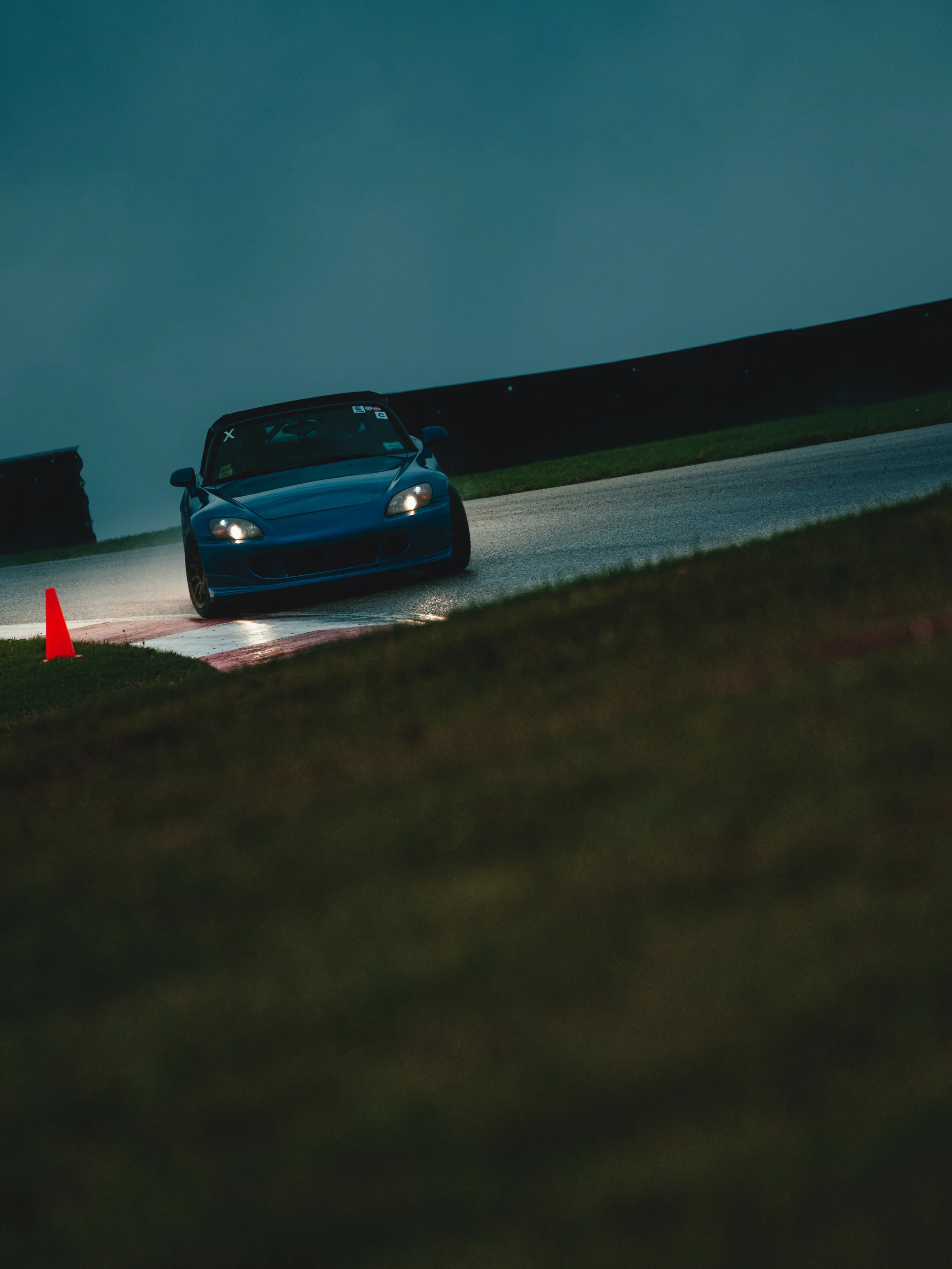
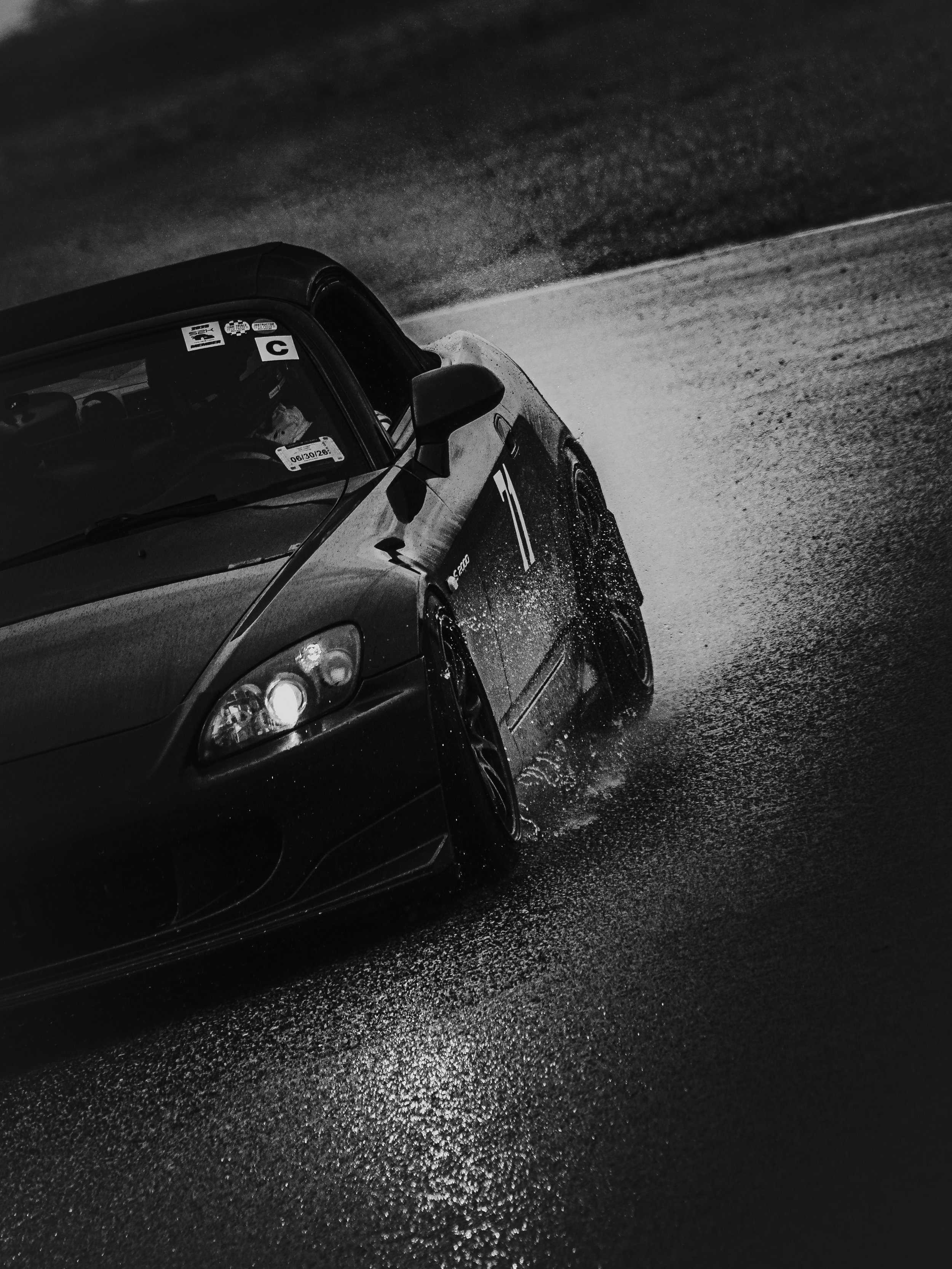
At the vernacular ‘microscopic’ level, sharp aggregate faces give the rubber something to deform around. Initial bite is strong. Steering loads early. Even in the wet, adhesion doesn’t vanish all at once. When microtexture is intact, the track doesn’t lie. PittRace resisted polishing—even in heavy braking zones, even where runoff crossed the racing line.
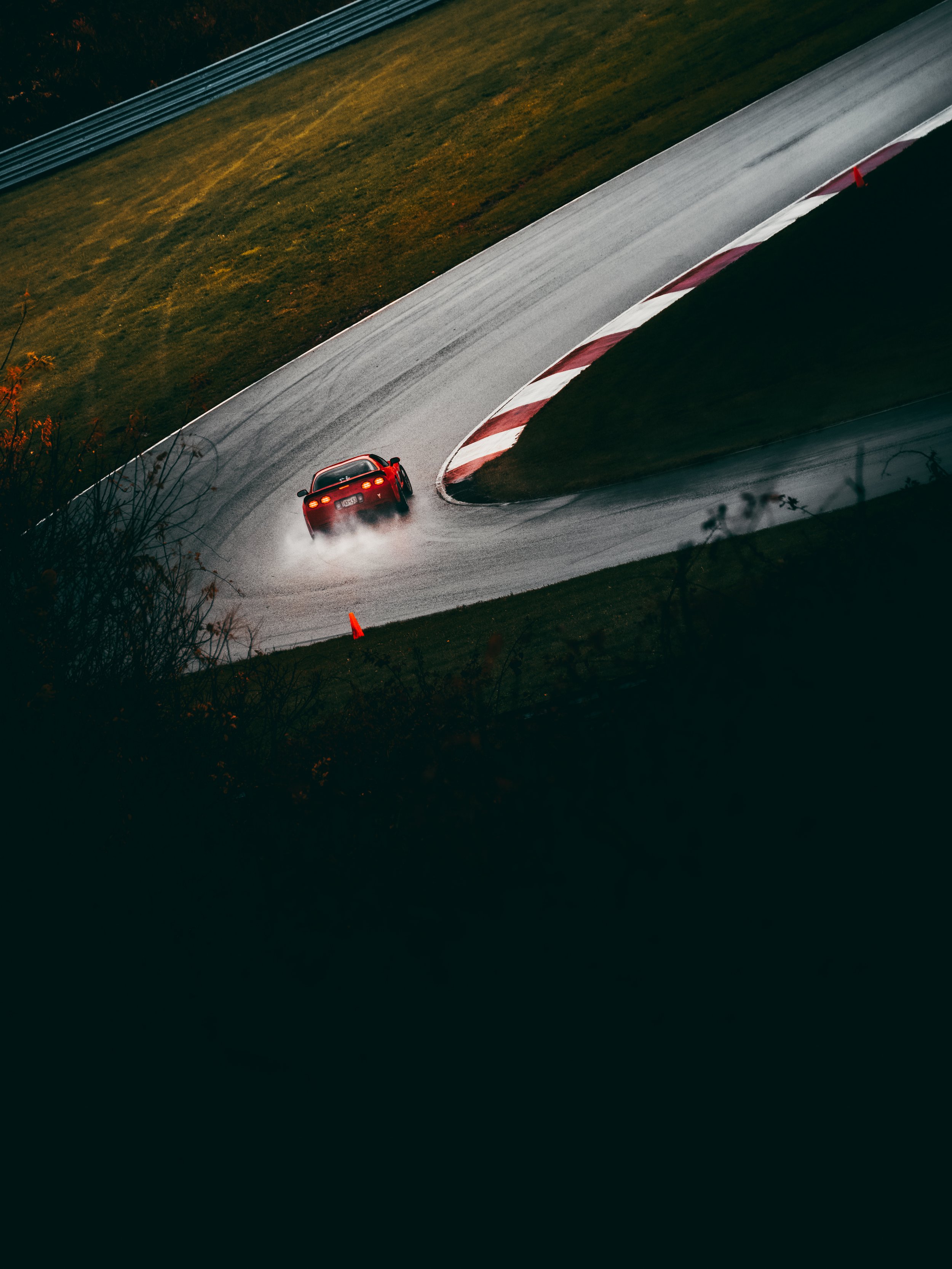
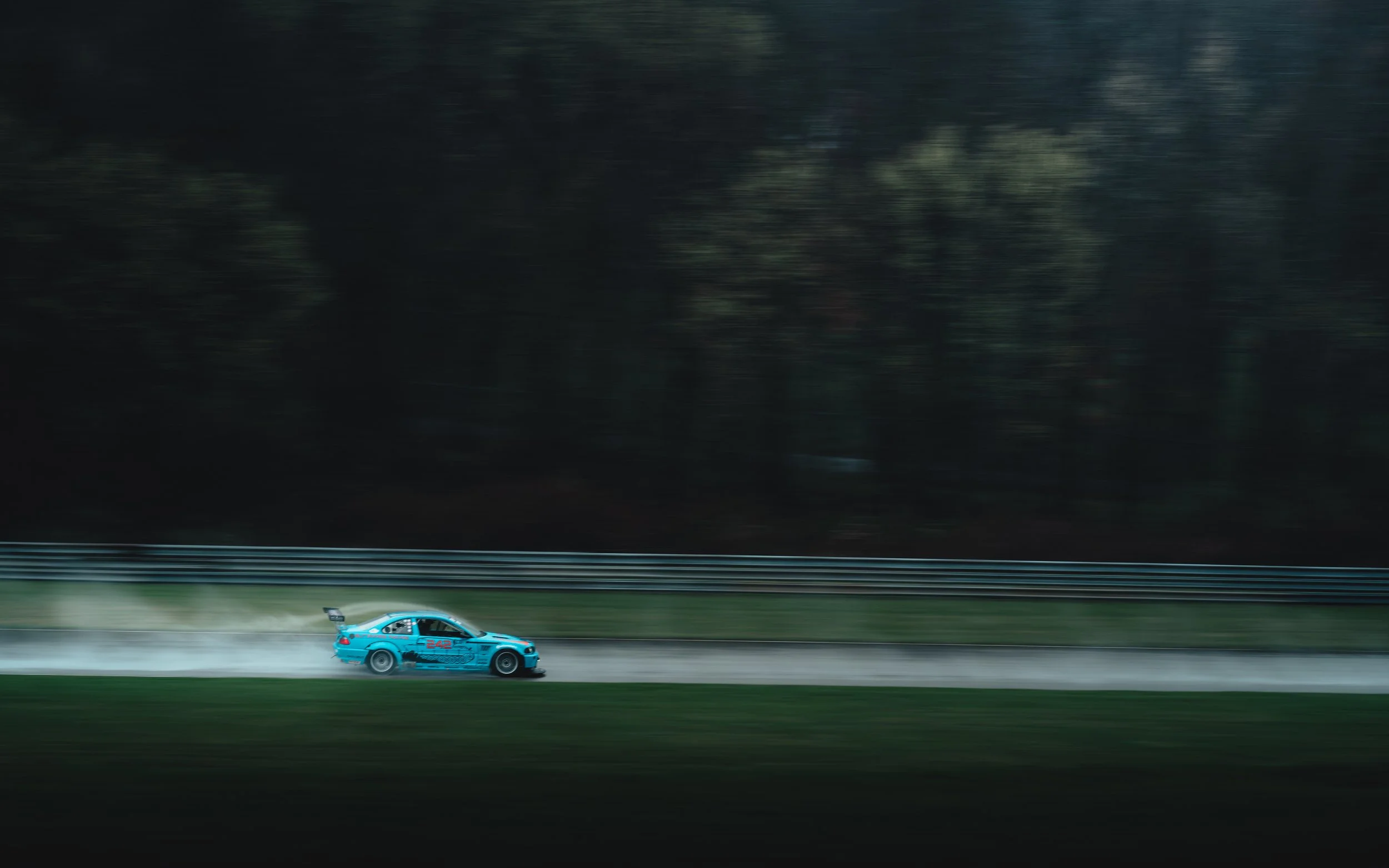
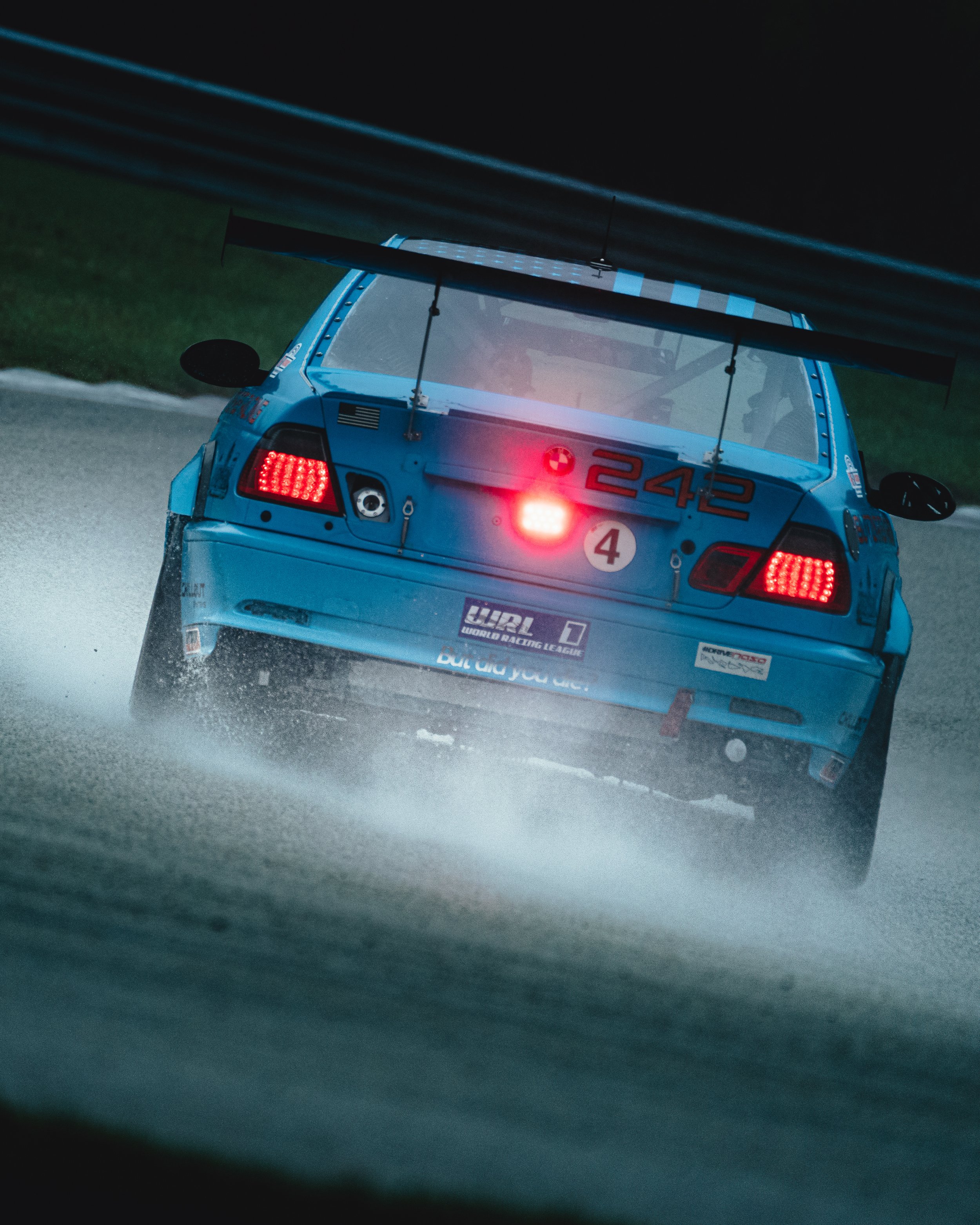
Macrotexture is what you can see: voids, valleys, the paths water chooses. Here, PittRace shows its intent. Tires sink just enough to be supported laterally through long, loaded sections. That deformation work explains the wear—but also the stability. In the wet, it’s the difference between skating and reading the surface.
The Evidence
You see it in the scars.
Where rubber builds.
Where exits punish impatience.
Reading the Track
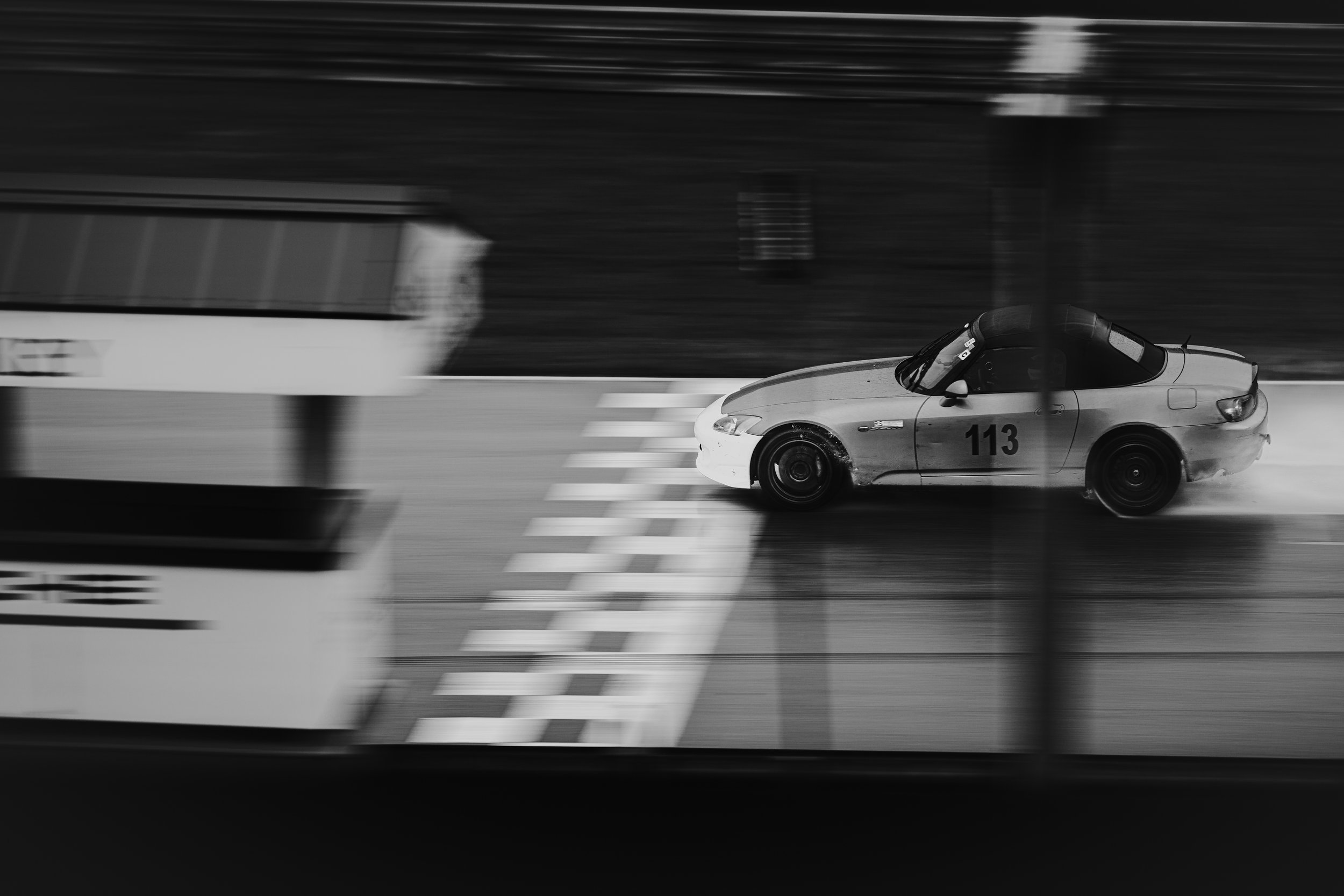
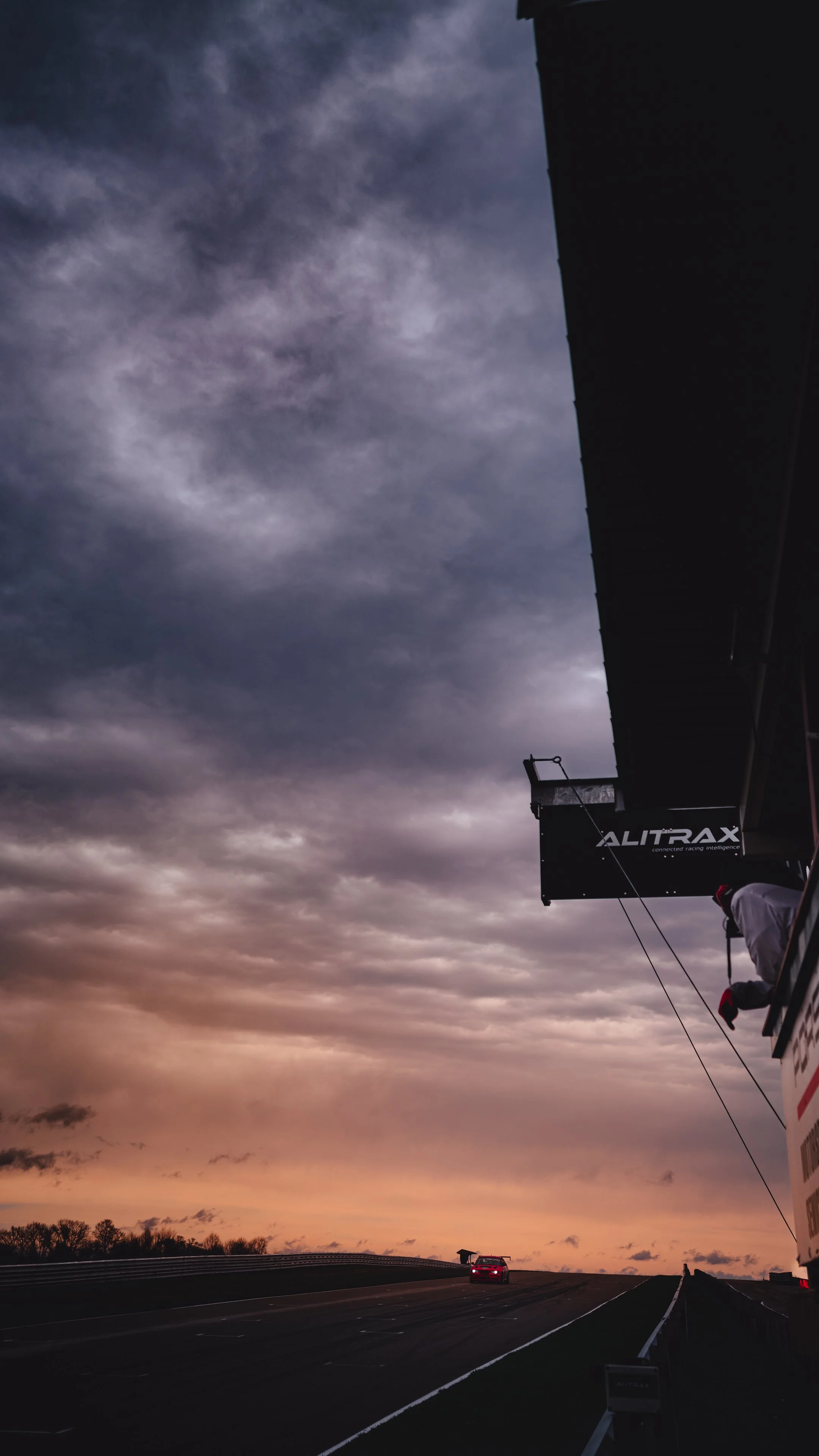
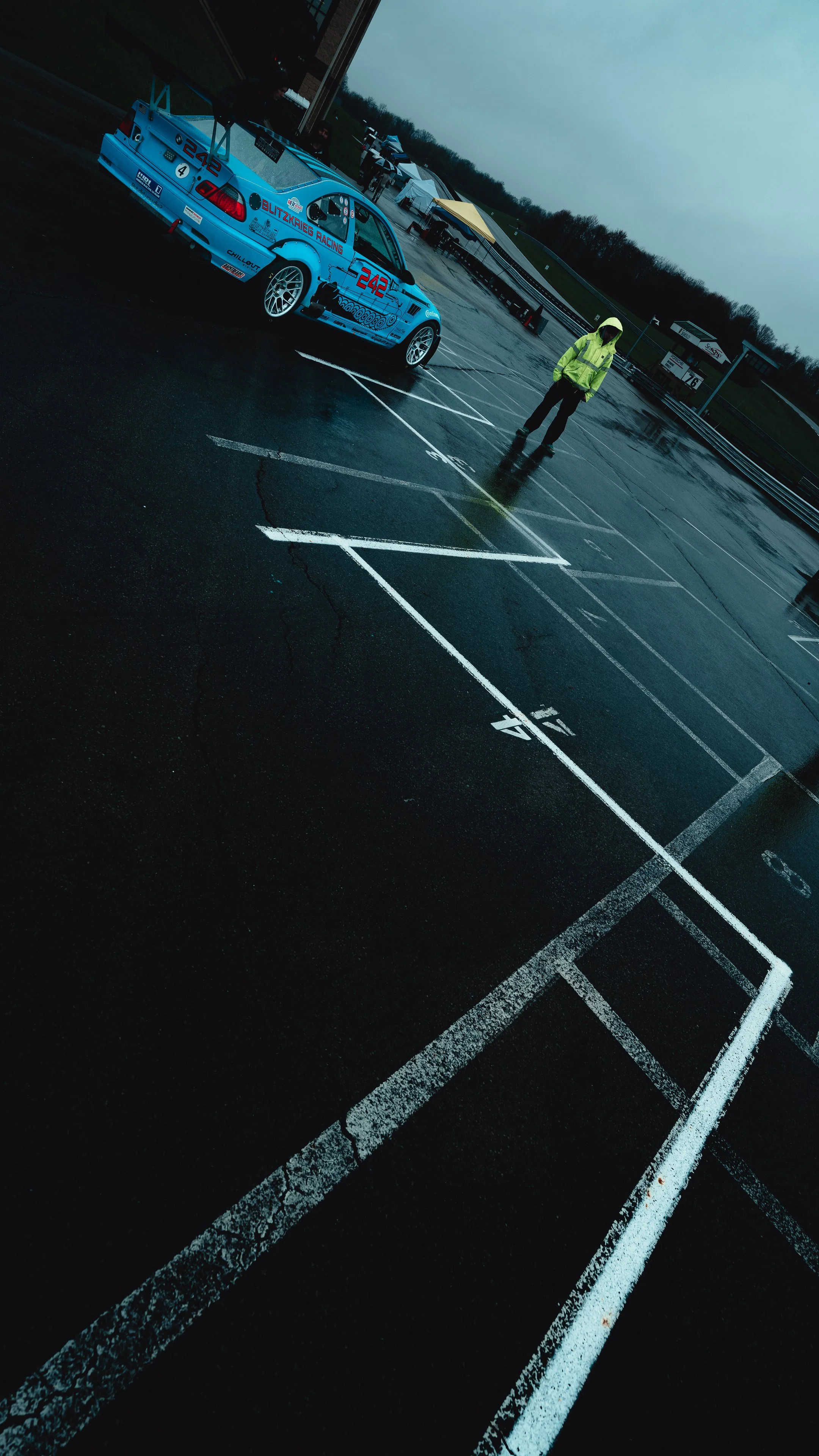
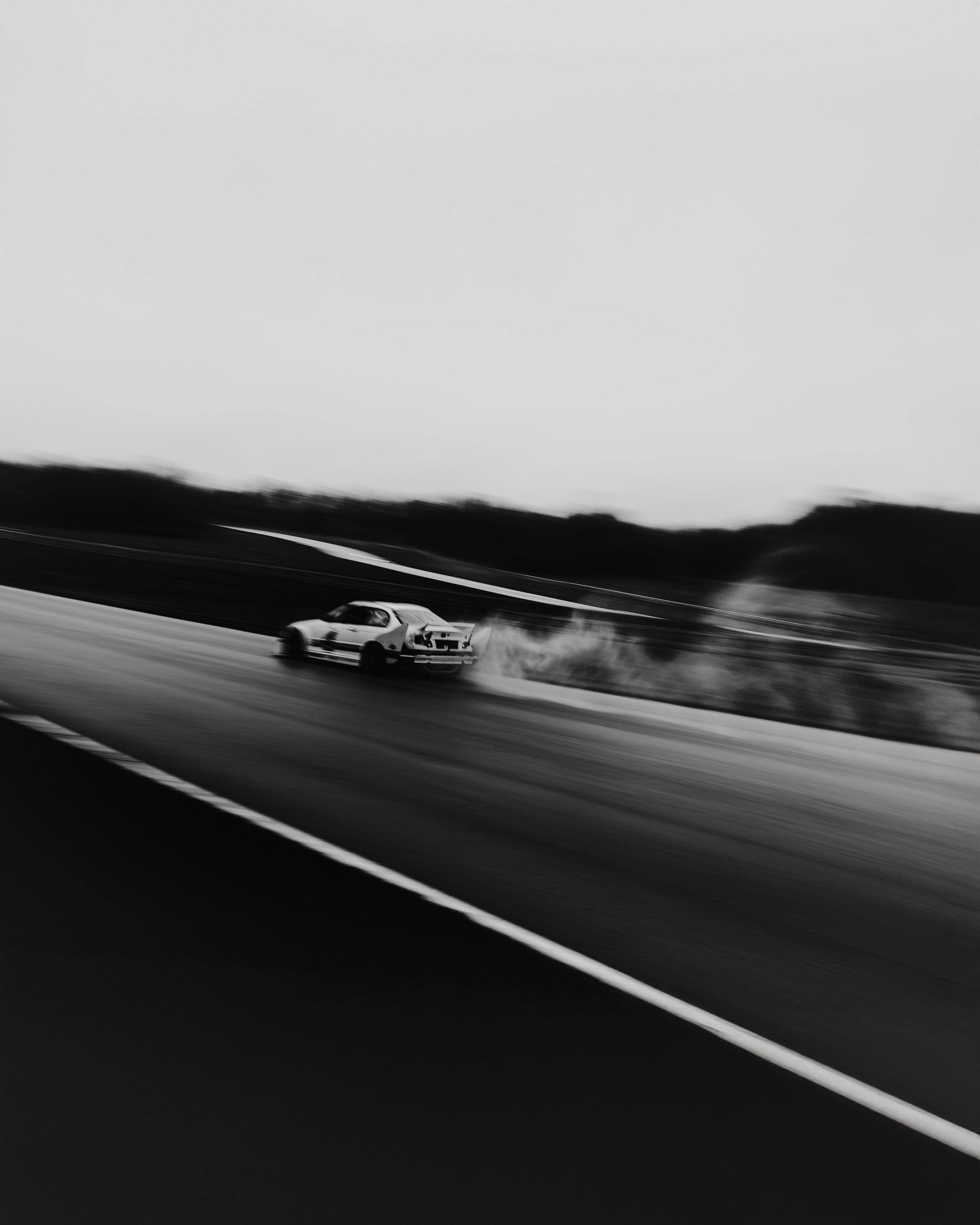
Photographing PittRace in its final season meant reading these surfaces like a map. Dry days showed abrasion and memory. Wet days revealed drainage and load paths. Skid marks weren’t decoration—they were data. The curbing wasn’t just paint; it was geometry and consequence.
No Decline
That’s what makes the closure hard to reconcile. This wasn’t a track past its prime. It hadn’t lost relevance. It had just finished becoming what it was designed to be.
PittRace didn’t flatter drivers. It informed them.
And in the quiet moments—when the cars are gone and the water settles into the low points—you can still see the conversation it used to hold.
Not just where people drove fast.
But where the surface answered back.